
Portrait Photography Classes in Singapore for Every Skill Level
You don’t need photography experience to start learning portrait photography. A portrait photography class in Singapore can introduce camera settings and composition through hands-on practice. At Pictorial, you can bring your own camera or borrow one at no charge.
It’s understandable to feel unsure about which settings to use or how to guide someone in front of the camera. These skills are easier to grasp when you practise with a camera in hand, rather than trying to memorise every setting first.
This guide explains how to choose a suitable starting level, what equipment to bring, and how ISO, aperture, shutter speed and composition affect portraits. It also covers practical outdoor guidance, so you can know what to expect and build confidence at your own pace.
Key Takeaways
- You can begin with foundational photography skills even if you’re new, and a loan camera can make it easier to get started.
- A DSLR with interchangeable lenses is preferred for the course, but you can practise with other camera types too.
- Learn how ISO, aperture and shutter speed work together, then use composition choices to shape the mood and focus of a portrait.
- Practical outdoor shooting gives you a chance to apply camera skills in real settings and learn through guided practice.
- Consider whether you’ll benefit most from a beginner session, a structured course or a more advanced class as your skills develop.
What equipment should I bring to a photography workshop in Singapore?
A DSLR with interchangeable lenses can be useful, but you can learn with different camera types, including a phone. Bring a camera you’re comfortable using; Pictorial also offers a complimentary camera loan if you need one. This means you can start learning even if you don’t own a camera.
Before packing, check that your camera battery is charged and that your memory card has space. A strap can help keep your camera secure during outdoor practice. If you have multiple lenses, start with the one you know best. You can focus on basic camera operation before experimenting with different lenses.
Course level matters as much as equipment. Beginners can start with a basic course to learn exposure and camera controls. For Level II, applicants need to complete Level I or have prior knowledge in digital photography. That foundation helps students spend more time refining images instead of learning the camera from scratch. If you’re unsure where you fit, choose based on what you can already do, such as changing exposure settings without relying on automatic mode.
Course dates, schedules and class counts depend on the selected course. Read its details before enrolling and note whether the sessions include outdoor practice, studio work or both. A practical outdoor session lets you test how changing light affects a subject. For a portrait exercise, you might compare a face in open shade with one turned toward brighter light, then review how each capture feels.
Course prices depend on the case and are given after a quote request; course format, instruction and included equipment affect the cost. The National Silver Academy subsidy for NAFA courses ends on 31 March 2027. This applies to NAFA courses, so it should not be treated as a general subsidy for every photography workshop. For portrait learning, check the course’s eligibility requirements and whether its stated learning outcomes suit your experience.
To book, use the course registration page and select the relevant course. Review the cancellation terms for that booking before completing registration, since those terms determine what happens if plans change.
Composition and practical shooting excursions
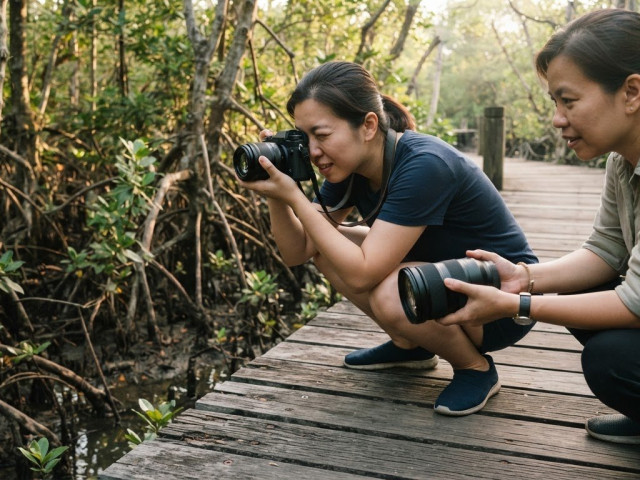
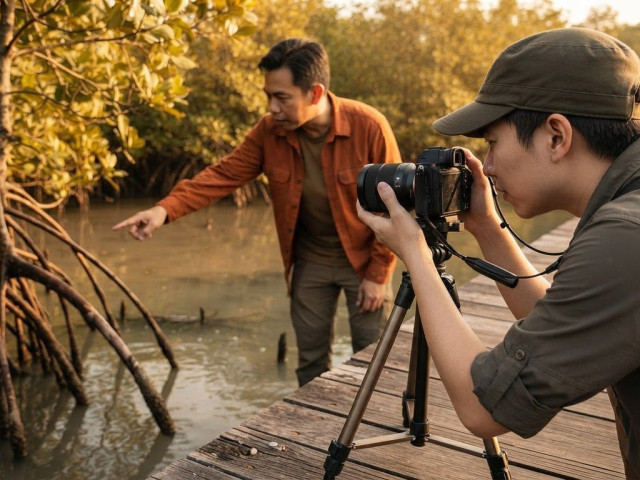
Outdoor practice turns composition, exposure and lighting into choices you can see in the frame. Try one technique at a time, then notice how small changes affect the portrait.
Composition and Framing
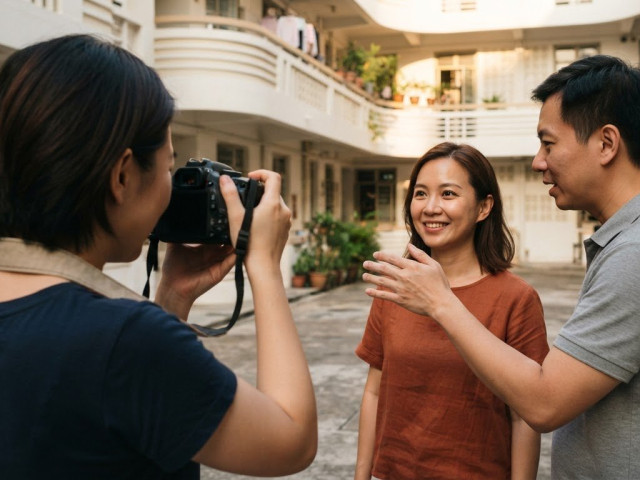
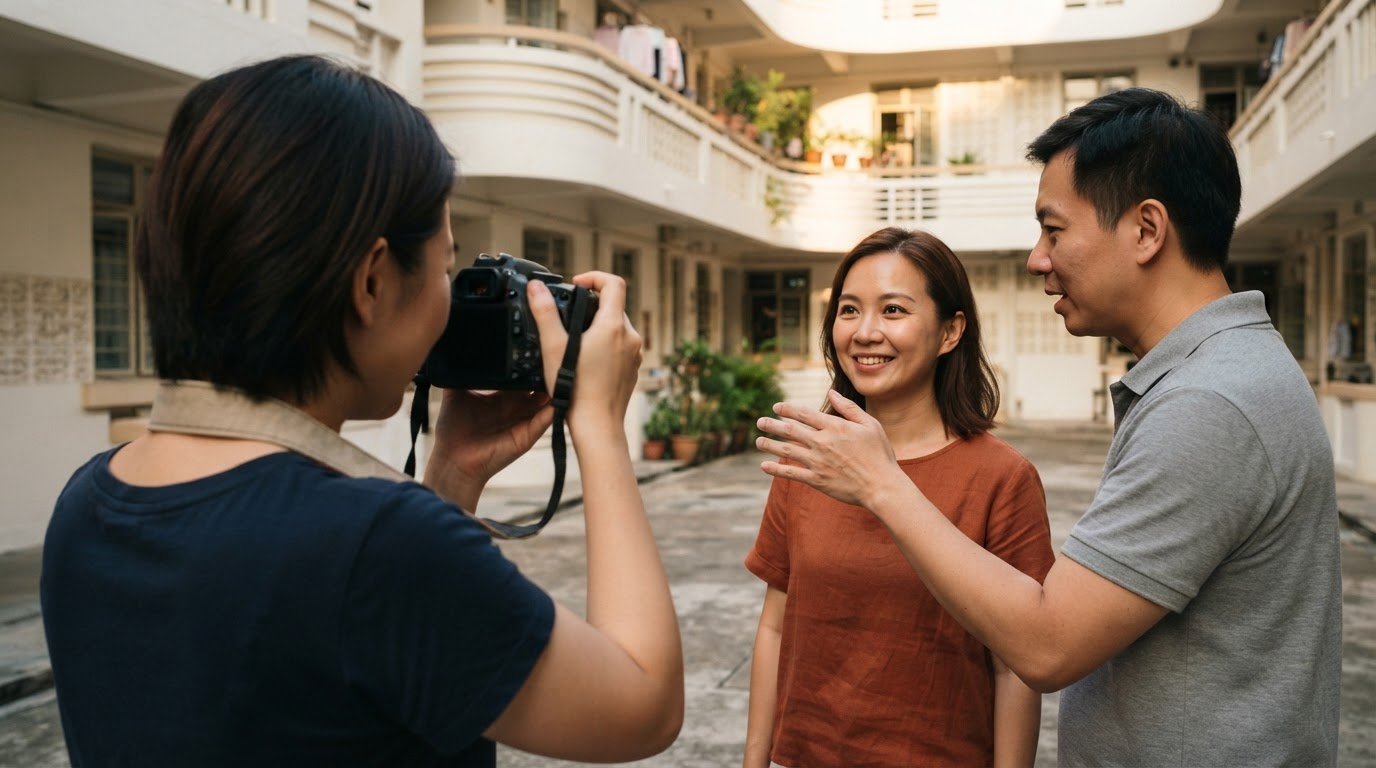
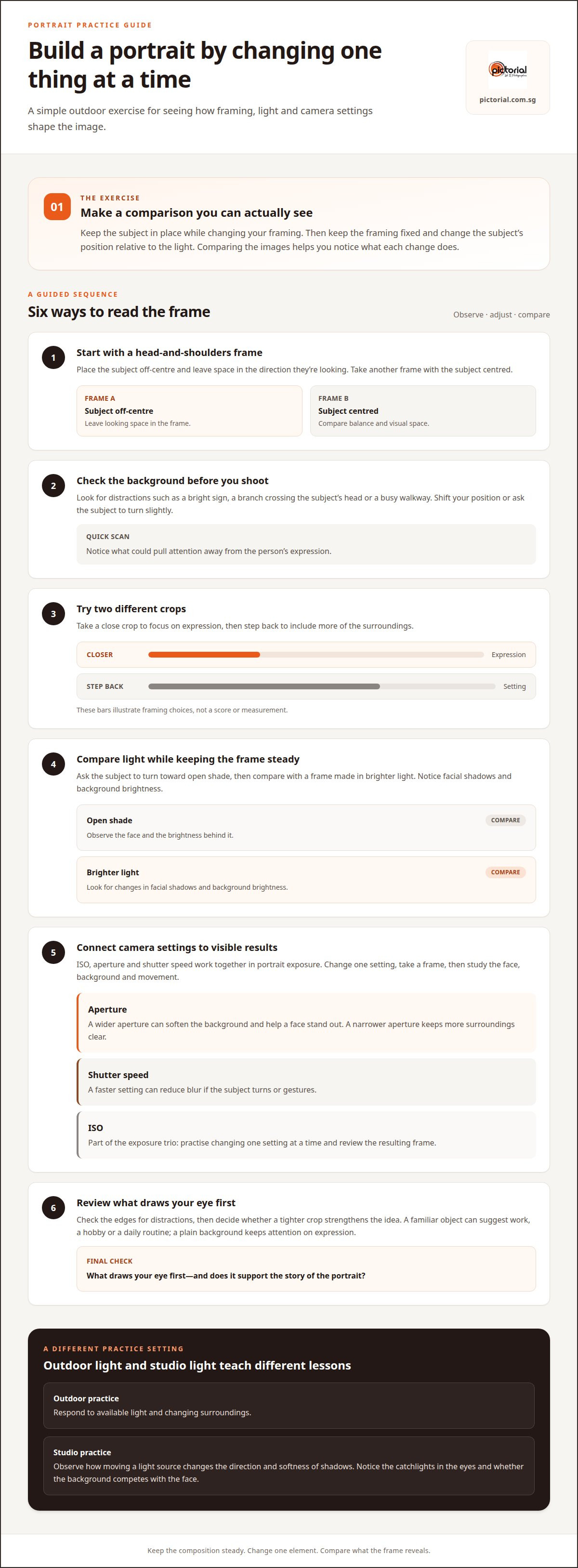
Composition is how you arrange the subject and surroundings; framing is what you include in the image. Start with a head-and-shoulders portrait, place the subject off-centre, and leave space in the direction they’re looking. Then take another frame with the subject centred. Comparing the images makes balance and visual space easier to recognise.
Look at the background before raising the camera. A bright sign, a branch crossing the subject’s head, or a busy walkway can pull attention away from their expression. Shift your position or ask the subject to turn slightly. During a workshop, try a close crop for expression, then step back to include more surroundings. Those framing choices can make a portrait feel intimate or show more of its setting.
Exposure and Lighting Practice
Outdoor light changes with the subject’s position and nearby shade. Ask them to turn toward open shade, then compare the face with a frame made in brighter light. Notice changes in facial shadows and background brightness. Keep the composition steady as you adjust exposure, so you can tell which difference came from the light.
Studio lighting gives a different practice setting. A class can demonstrate how moving a light source changes the direction and softness of shadows on a model. Notice the catchlights in the eyes and whether the background competes with the face. If a workshop includes model practice, focus on giving clear, simple directions, such as turning the shoulders while keeping the face toward the light.
An outdoor exercise is most useful when it has a clear focus. Choose a location with shade and a brighter background, then make several portraits from one viewpoint. Keep the subject in place while changing your framing; next, keep the framing fixed and change their position relative to the light. Comparing the images builds observation skills without changing everything at once.
Use each lesson to tell a small visual story. A portrait beside a familiar object can suggest work, a hobby or a daily routine, while a plain background keeps attention on expression. Check the edges of the frame for distractions, then decide whether a tighter crop strengthens the idea. Review the images together and describe what draws your eye first. That simple step connects composition techniques with the story you want to capture.
Outdoor practice and studio exercises teach different lessons, so look for a workshop format that matches what you want to practise. Guided outdoor shooting helps you respond to available light and changing surroundings; studio work lets you observe controlled lighting and model direction. To develop these skills through structured photography lessons, choose a course that includes practical shooting alongside camera instruction.
Digital camera operation and exposure settings
Camera controls become easier to understand when you connect each adjustment to a visible result. Portrait exposure depends on ISO, aperture and shutter speed working together. Change one setting, take a frame, then study the face, background and movement. This hands-on approach makes the camera’s controls practical tools rather than mysterious menu options.
Aperture affects how much of the scene appears in focus. A wider aperture can soften the background and help a face stand out, while a narrower aperture keeps more surroundings clear. Shutter speed controls how movement is recorded. A faster setting can reduce blur if a subject turns or gestures. ISO affects the camera sensor’s sensitivity to light: raising it can help in dimmer conditions, but can also change image noise.
Start by deciding what matters most in the image. For a corporate portrait against a busy office background, you may want the person to stand apart from the scene. Adjust aperture, then check that the eyes and face remain sharp. If the person moves, consider shutter speed next. If the image looks too dark, review the available light and exposure settings rather than changing everything at once.
For practical learning, use a repeatable camera routine:
- Set focus on the subject’s nearer eye, then inspect the result.
- Take a frame and check whether the face is too bright or too dark.
- Adjust one exposure control and capture another frame from the same position.
- Compare the images to see which change improved the portrait.
This approach makes each adjustment easier to understand. If the background distracts, change the subject’s position or your framing before reaching for another setting. If the face looks blurred, check focus and movement, then consider shutter speed. Reading the image first helps you make deliberate choices instead of relying on repeated trial and error.
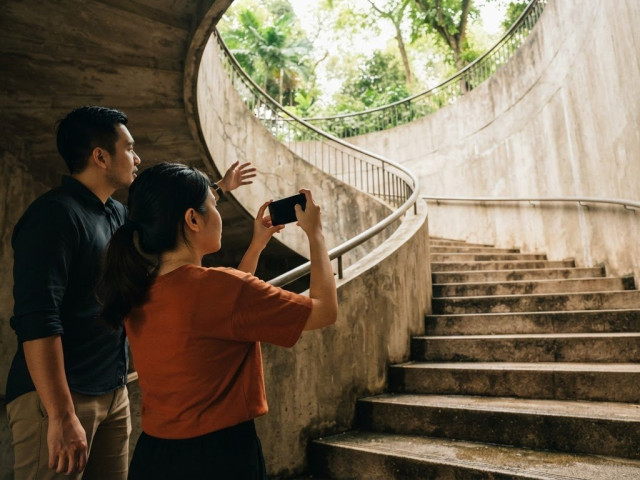
A DSLR with interchangeable lenses is preferred for the course, but any type of camera can be used. A phone or compact camera still lets you practise focus, exposure and timing. Camera menus differ, so learn where your device changes aperture, shutter speed and ISO before shooting. If you borrow a camera, begin by locating those controls and reviewing how to focus and capture an image.
During a portrait exercise, keep the subject and composition steady while testing exposure. Then change the light or the subject’s position and observe how the image responds. This separates camera operation from other creative decisions. With practice, settings become useful tools for shaping a visual result, whether you’re making a simple portrait or a consistent series for a workplace profile.
Do Singapore portrait classes cover lighting and models?
A portrait photography class can teach lighting and working with a subject, but studio access and model practice aren’t automatic parts of every course. Consider what you want to practise. Outdoor lessons focus on responding to available light and real settings, while studio work involves controlled lighting. Check the course format to see whether it matches your goal.
Lighting practice starts with observation. Place a subject near a window or in open shade, then notice where shadows fall across the face. Turn the subject slightly and compare the light on both cheeks. This shows how light direction changes a portrait’s mood without additional equipment. In a studio, you can make a similar comparison by moving the light source and watching the shadows shift.
Studio lighting involves more than switching on a lamp. A useful exercise connects the light’s position, the subject’s pose and the camera’s exposure. For example, move a light to one side and observe whether the far side of the face falls into shadow. Then change the subject’s angle before adjusting camera settings. Changing one element at a time makes each difference easier to understand.
Working with a model adds communication to the technical practice. Give simple directions, such as turning the shoulders toward the light while keeping the face toward the camera. Pause between frames so the subject can settle into the pose. Check whether the expression looks natural, the eyes are in focus and the background distracts from the face. These small checks help make a portrait feel considered.
Useful class activities can include:
- Comparing window light with a nearby shaded area.
- Making portraits with the subject facing toward, then away from, the light.
- Observing how a studio light changes facial shadows when repositioned.
- Practising clear pose directions and reviewing how each pose reads in camera.
Each exercise builds a different skill. Available-light practice helps you respond to existing conditions, while studio work lets you control light placement more deliberately. Directing a model develops your ability to give calm, specific instructions. Together, these skills connect technical choices with the person in front of the camera.
Before choosing a course, decide what you want to practise. If your goal is to use daylight well, look for guided shooting in real settings. If you want to shape shadows with controlled lighting, choose a course that includes studio practice. For experience directing a model, look for practical portrait exercises involving a person as the subject. Match the class format to your learning goal.
How do Singapore portrait photography classes compare with private lessons or workshops?
The main difference is how instruction and practice are organised. A structured class follows a planned sequence, a private lesson can focus on one learner’s needs, and a workshop often centres on a specific practical exercise. For portrait photography, compare the time spent on camera operation, posing, lighting and reviewing images. The best fit depends on whether you want a learning path, individual attention or focused practice.
A course suits learners who want to build skills in sequence. A beginner might first practise focus and exposure, then use those controls during a portrait exercise. A planned progression helps connect each camera adjustment to its effect on the image. It can also suit someone who wants to develop beyond a single session.
Private lessons give the instructor room to focus on one student’s questions. For example, the session could spend more time on aperture if the learner wants softer backgrounds, or on directing a subject who feels awkward in front of the camera. This format is useful when the learner already knows what they want to improve. Its value lies in the focused pace, rather than comparison with other students.
A workshop puts practical activity at the centre. A portrait exercise could involve making several frames in one location while changing the subject’s position or the direction of light. Participants can then compare how those choices affect the result. Seeing someone else approach the same challenge offers a different perspective, and a focused session can suit someone seeking hands-on practice.
Use these points to decide what you need from the session:
- Choose a course if you want lessons arranged around progressive camera skills.
- Choose a private lesson if you want concentrated guidance on a specific difficulty.
- Choose a workshop if you want to practise a defined task, such as posing or available-light portraits.
- Look for practical shooting and image review if learning by doing matters most.
For portrait photography in Singapore, check the learning format as carefully as the course title. A class that includes outdoor shooting gives you a chance to respond to changing natural light. A studio-based session focuses on controlled lighting conditions. A small group can also allow more direct instructor attention while leaving room to observe others’ approaches. Match these features to your current goal, whether that is making a first clear portrait or refining how you direct a subject.
Before enrolling, identify one skill you want to develop. It could be choosing exposure settings without relying on automatic mode, finding a clean background or giving a subject clear posing directions. Then compare the course content with that goal. Relevant hands-on practice makes it easier to apply what you learn during your next portrait shoot.
Pictorial
Pictorial offers hands-on photography courses in Singapore for beginners and more experienced learners. Small groups of up to three participants allow for personalised guidance during practical outdoor shooting. You can bring your own camera or use a complimentary loan camera while practising core settings and portrait techniques.
If you’re starting out, the Photography Starter Session offers a practical introduction. Learners ready to build on their skills can consider the Intermediate Photography Course, while the Complete Photography Course provides a broader learning path. Choose according to your experience and what you want to practise next, from exposure control to composition.
For guidance on choosing a suitable starting point, contact Pictorial.
Choose the next skill you want to practise
Your first portrait doesn’t need to be perfect to teach you something useful. Choose one skill to focus on during your next shoot, such as giving clearer direction, framing more deliberately or noticing how light falls across a face. A portrait photography class in Singapore gives you a guided setting to practise and build on that skill.
Pictorial offers different learning paths, including the Photography Starter Session, Intermediate Photography Course and Mobile Photography Essentials. Think about the camera you want to use and the skill you’d like to develop next. That gives you a practical starting point for choosing a course that fits your goals.
Keep practising one decision at a time. Each thoughtful frame helps you see more clearly what you want your portraits to say.
Frequently Asked Questions
Can I enroll in photography courses without prior experience?
Yes, beginners can enrol without prior photography experience. A starting-level course can introduce camera fundamentals before you move into more involved practice. The Photography Starter Session is a short entry point, while the Basic Photography Course is suited to learners building a foundation. If you already understand basic camera controls, an intermediate-level option may better match your current skills.
What types of photography courses are available in Singapore?
Pictorial offers photography courses for different interests and skill levels: the Photography Starter Session, Basic Photography Course, Intermediate Photography Course, Complete Photography Course, Comprehensive Photography Course, Advanced Photography Masterclass and Mobile Photography Essentials. Learners can choose to practise with a phone, develop camera skills or follow a longer learning path.
Who Are These Courses For?
These courses suit beginners, developing photographers and experienced learners who want guided practice. A phone user interested in more thoughtful travel portraits may prefer Mobile Photography Essentials, while someone who already adjusts camera settings may seek more advanced instruction. Photography can be a personal creative pursuit rather than a professional goal. Choose according to your experience and how you want to use your images.
Who will you be learning from?
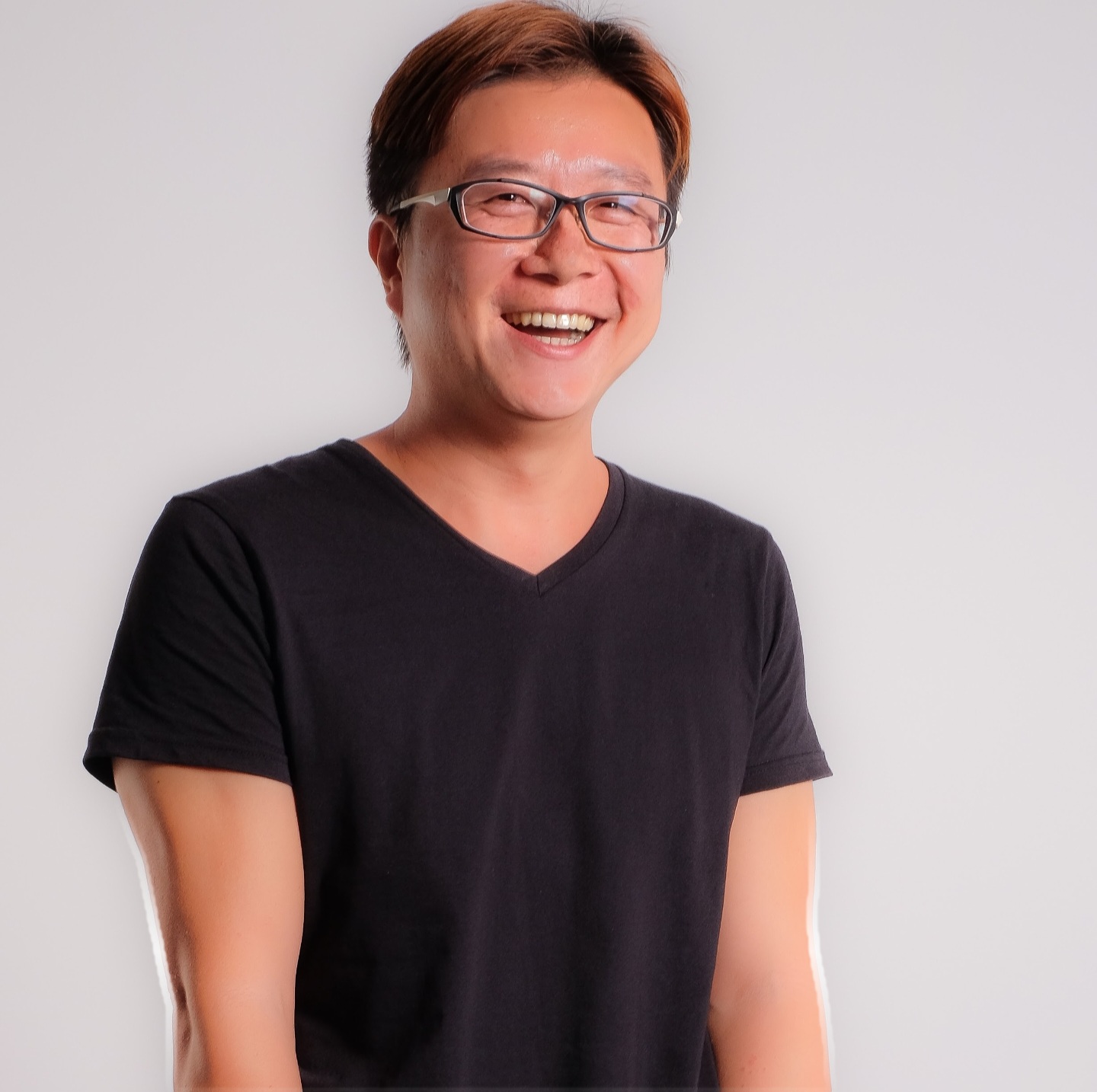
You’ll learn from Keith, Pictorial’s lead instructor and a photography guide with 35 years of real-world experience. He has worked alongside Sony, Nikon, Fujifilm and Olympus. During practical lessons, an instructor can help connect a camera choice to the image you’re trying to make. For instance, they can guide you through adjusting a portrait’s framing and then discuss how the result supports your intended subject.
Will I receive a certificate upon completing a photography course?
Yes, Pictorial’s courses award a Certificate of Completion when you finish the programme. It records completion of the course, rather than indicating accreditation or endorsement by an external authority. For example, after finishing a beginner course, you can keep the certificate alongside your practice notes and selected images. The practical value of the learning remains in the techniques you can apply to future photographs.
What portrait photography classes are available in Singapore?
Pictorial offers photography courses that help you practise skills relevant to portraits, rather than a named portrait-only course. Options include the Photography Starter Session, Basic Photography Course, Intermediate Photography Course and Complete Photography Course. Consider the type of portrait you want to make, such as a family image or a professional profile, and choose a course level that suits your experience.
Which Singapore portrait photography classes are suitable for beginners?
Beginners can consider the Photography Starter Session or Basic Photography Course. The Starter Session offers an introduction, while the Basic course provides a structured foundation. If you mainly take pictures on a phone, Mobile Photography Essentials is another relevant starting point. A simple portrait exercise can help you practise spotting background distractions and choosing a clear subject before moving on to more complex shooting situations.
What do portrait photography courses in Singapore cover?
Photography courses can build skills that transfer directly to portraits, including camera handling, composition, lighting and exposure. In practice, you might learn to frame a subject against a simple background, then consider how the available light affects the image. Course content varies by level and format, so a beginner focuses on core technique, while a more experienced learner can develop greater control and consistency across different subjects.
Disclaimer
© Pictorial | All Rights Reserved.