
Mirrorless Camera Course: What You’ll Learn and How to Choose
What if the skills you learn on one camera can help you use another? Exposure, composition and reading light carry across camera systems, even when menus and autofocus options look different. A mirrorless camera course can help you connect those foundations to the controls in your hands, rather than leaving you to guess what each setting does.
If camera menus, autofocus modes and exposure controls feel intimidating, that’s a normal place to start. The challenge isn’t just learning what a button does. It’s knowing when to use it while making a photograph. A mirrorless camera’s electronic viewfinder can preview exposure as you shoot, making it easier to see how a setting changes the image.
This guide explains what a useful course can teach, how self-paced lessons compare with instructor-guided practice, and which skills transfer between camera systems. You’ll also find practical points to consider before choosing your next step, so you can learn at a pace and in a format that suits you.
Key Takeaways
- A mirrorless camera course should connect camera controls with practical decisions, not just ask you to memorise menu options.
- Exposure, composition and reading light transfer across camera systems, while menus and handling take practice to learn.
- Compare self-paced lessons, group instruction and private guidance by the flexibility, feedback and practice you need.
- Choose a course by clarifying your goal, experience level and preference for hands-on support.
- Pictorial’s outdoor teaching in groups of up to three offers a practical way to build confidence using a camera.
What Does a Mirrorless Camera Course Actually Teach?
If your camera’s menus, focus options or buttons feel unfamiliar, you’re not behind. They’re part of learning a new tool. A mirrorless camera course combines camera operation with photography practice, helping you understand controls and use them to make photographs with more intention.
That practical focus matters. Knowing where exposure settings sit in a menu is useful, but it’s only one part of making a picture. You also need to notice how light falls, choose what belongs in the frame and decide whether the exposure suits the scene. These skills develop through looking, trying and reviewing, not just by memorising settings.
A mirrorless camera gives you tools to support that process. Its electronic viewfinder can show how exposure changes as you adjust settings, while the menus and autofocus options let you shape how the camera responds. The Mirrorless Interchangeable-Lens Camera overview explains the technology and how mirrorless cameras compare with DSLRs. A lesson brings those ideas back to the camera in your hands.
Who benefits from mirrorless camera lessons?
Beginners can use lessons to move beyond automatic settings without needing technical knowledge first. You might start by asking how to make an indoor photo brighter or keep a moving person in focus, then practise changing one control at a time. Camera owners who have already read about settings can benefit too: structured practice helps turn what you’ve read into choices you can repeat. Developing photographers may gain from feedback on real images, which can help them assess how framing, timing or focus affected the result.
What makes learning mirrorless controls feel different?
The electronic viewfinder, menus and autofocus options can feel unfamiliar at first, but they’re tools to practise rather than obstacles. Button layouts and menu names vary between camera models, so hands-on time with your own camera can help you find a setting when you need it. The underlying photographic ideas still carry across systems. You don’t need a separate course for every brand to learn how to observe a scene and make considered shooting decisions.
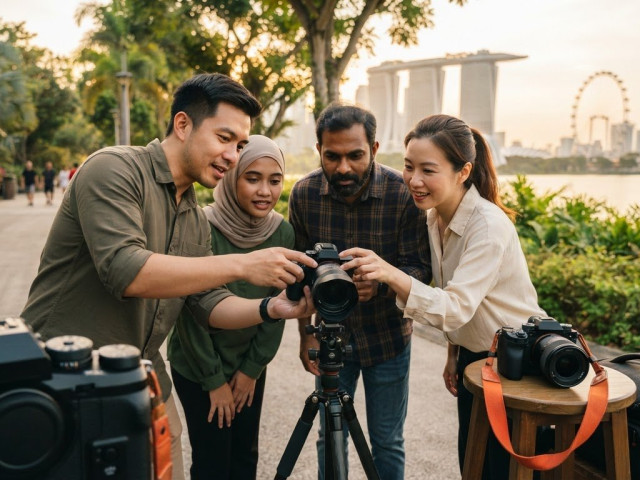
Guided outdoor practice can make those connections clearer. Try a control, see its effect in the viewfinder and notice how the image changes in real light. Pictorial’s photography courses include practical outdoor guidance in groups of up to three participants. You can use your own camera or a complimentary loan camera. For a structured foundation, explore Pictorial’s photography course options. The aim isn’t to master every menu at once. It’s to build confidence by making one useful decision at a time.
Mirrorless vs DSLR Courses: Which Skills Transfer?
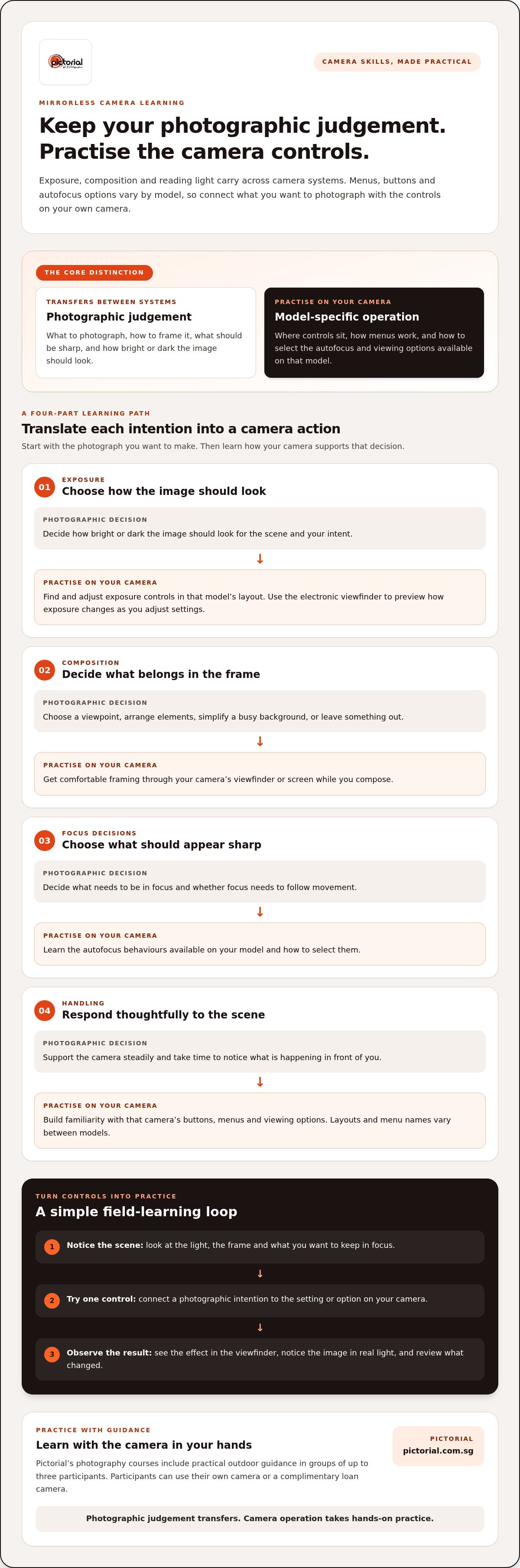
Changing from a DSLR to a mirrorless camera doesn’t mean starting photography from zero. The way you read a scene and decide what to photograph remains useful. The way you reach a particular control may change. This comparison helps separate photographic judgement from camera-specific operation.
| Learning area | What transfers | What may need practice on your camera |
|---|---|---|
| Exposure | Deciding how bright or dark the image should look for the scene and your intent. | Finding and adjusting exposure controls in that model’s layout. |
| Composition | Choosing a viewpoint, arranging elements in the frame and deciding what to leave out. | Using the viewfinder or screen comfortably while framing. |
| Focus decisions | Choosing what should appear sharp and when focus needs to follow movement. | Learning available autofocus behaviours and how to select them. |
| Handling | Supporting the camera steadily and responding thoughtfully to a scene. | Getting familiar with the camera’s buttons, menus and viewing options. |
Photography foundations that work across camera systems
Composition starts with what you notice, not the camera brand. You might move to simplify a busy background, shift your viewpoint to include a useful foreground detail, or wait for a person to enter the frame. Reading available light also applies across systems. Notice where it falls, how strong it feels and whether it suits the photograph you want.
Exposure is a photographic decision too. The aim is to choose how the image records the scene, rather than to find a brand-specific setting. Practising that decision on your own camera helps you carry the principle into real situations. Adobe’s overview of the advantages of mirrorless cameras offers additional context on mirrorless features, but your judgement develops through using the camera and reviewing the result.
Controls and workflows that may need camera-specific practice
Some parts of the process are more closely tied to the model. An electronic viewfinder may offer display options you’ll want to understand. Autofocus systems can differ in how you choose a focus area or tracking behaviour, and menus may place familiar controls in different locations. These differences can slow you down at first, but they don’t erase what you know about making a photograph.
Useful practice connects a photographic intention to the camera’s operation. For example, decide what should stay in focus, then learn how your model supports that choice. The exact steps may differ between cameras, so experience with one layout won’t teach you every menu by heart. It can, however, help you learn a new layout with less uncertainty.
The takeaway: photographic judgement transfers, while camera operation depends on the model. If you’re building those foundations, Pictorial’s beginner photography course offers a practical place to start.
Self-Paced Lessons or Hands-On Mirrorless Camera Classes?
The right learning format depends on how you like to practise. Self-paced lessons offer flexibility, while group instruction and private guidance make it easier to ask questions as they arise. Each approach can help you learn. The difference is how much structure, feedback and shared practice you want.
| Format | Can suit learners who value | A point to consider |
|---|---|---|
| Self-paced lessons | Flexible timing and the ability to revisit explanations. | You need to plan your own practice and follow-through. |
| Group instruction | Guidance during practice and the chance to learn alongside others. | Teaching follows a shared session structure. |
| Private guidance | Individual attention and a pace shaped around personal questions. | The learning experience is focused on one learner’s needs. |
When self-paced learning is a good fit
Replayable lessons can help when a camera concept takes time to settle. You can pause, revisit an explanation and return to it before trying the idea with your own camera. This flexibility is useful, but you’ll need to create the structure yourself. Watching several lessons in a row can feel productive without building much confidence if you don’t make time to practise.
Give each viewing session a small task. After a lesson on focus, for example, spend time choosing a subject and testing how different focus choices affect the image. Then review the results and note what you’d try next. A simple routine like this turns a video into a working lesson, even when you’re learning independently.
What guided, practical instruction adds
In a guided class, you can raise a question while using the camera, not only after you’ve finished studying. An instructor can respond to what you’re trying to photograph and help you connect a control choice with the result. That immediate exchange can be useful when you’re unsure why a shot didn’t turn out as intended.
Outdoor practice brings changing conditions into the learning process. Light shifts, people move and backgrounds can become busier, so you can try a decision, check the result and adapt. Conditions aren’t as easy to repeat as a recorded demonstration, but that’s part of the practice: learning to respond thoughtfully to the scene in front of you.
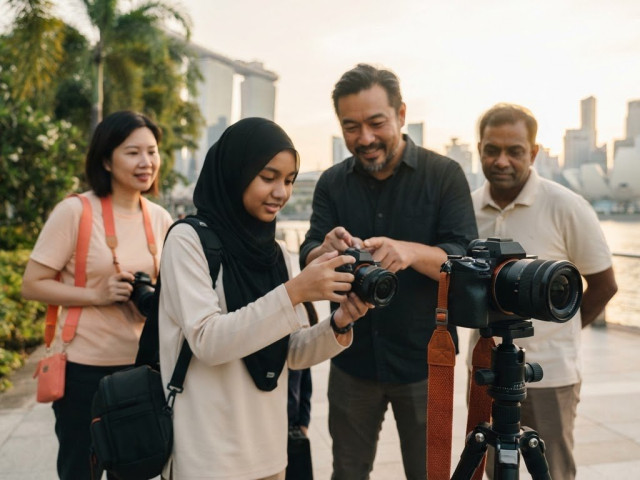
Pictorial’s practical outdoor classes use small groups of no more than three participants. You can practise with guidance while seeing how others approach a scene. A mirrorless camera course can be self-paced, group-based or individually guided. The best fit depends on whether flexibility, live feedback or a personal pace matters most to you. If learning alongside an instructor helps you stay engaged, hands-on practice is a useful way to build confidence with your camera.
How to Choose a Mirrorless Camera Course That Fits Your Goals
A useful course should meet you at your current level and give you a clear next step. Before choosing, decide what you want to do more confidently with your camera. You may need a foundation in exposure, help finding controls on your model, or feedback as you refine the way you shoot. Use this checklist to compare your needs with the learning experience.
- Define your goal. Be specific. “Take better photos” is a starting point, but “understand why my indoor photos look too dark” gives you something practical to work on. A focused goal helps you judge whether a course covers the skills you need.
- Assess your experience. If exposure and camera operation still feel unfamiliar, start with the foundations. If you already understand the basics, look for opportunities to refine your habits and get feedback on your images. If you’re still deciding what to work on, this practical guide to improving photography skills can help you identify a useful learning goal.
- Check the practice. Look for a balance of explanation and time spent taking photographs. A lesson is easier to apply when you can try a technique, review what happened and practise again. Consider whether the pace leaves room for questions rather than moving straight from one topic to the next.
- Review the support. Think about how you learn best. Do you want to pause and revisit material on your own, ask an instructor questions during practice, or receive ongoing feedback? Also consider whether you can use your own camera or would benefit from a loan camera.
Match the course to your current experience
First-time learners often benefit from clear instruction in exposure and basic camera operation before tackling more specialised goals. A structured beginner course can provide a starting point. Photographers with more experience may instead want guided practice that helps them notice patterns in their images and adjust their approach.
Check the practical details before choosing
Think through what you’ll need to take part comfortably. Using your own camera lets you learn its layout as you practise. A loan camera can help if you don’t yet have one. If you’re aiming to move beyond automatic settings, consider what you want to understand or practise first. This beginner’s guide to leaving Auto mode offers a way to think about that goal before you choose a course.
The best fit is one that helps you make progress without asking you to learn everything at once. A mirrorless camera course should connect its teaching to the decisions you want to make, at a pace that gives you room to practise. Pictorial offers hands-on group and private photography workshops, so you can choose the learning format that suits you.
A Supportive Next Step: Learn with Your Own Mirrorless Camera
Camera familiarity grows through use. With guided practice, a setting becomes more than a menu item: you learn when it may help, how to check the result and what you might change next time. Those small choices can become repeatable habits, leaving you more attention to notice the photograph you want to make.
Pictorial’s classes include practical outdoor guidance, where you can try ideas with real scenes and changing light. Groups have up to three participants, giving learners room to practise and ask questions. You can use your own camera or a complimentary loan camera, so you can take part even if you’re still deciding which equipment to use.
What learners can expect from a beginner course
The Basic Photography Course offers a structured starting point for learners building photography foundations. It runs for 3 sessions, 2 hours each, and the listed age requirement is All age, min. 9. It includes Complimentary camera loan (if needed) and a Certificate of Completion.
Bring your mirrorless camera if you have one, so you can practise with its controls as you shoot. If you don’t, a loan camera gives you a way to take part and work on the same photographic foundations.
Continue learning at a pace that suits you
Start with what you want to do next, not with camera-menu terms. You might want to understand exposure more clearly, feel at ease using your camera, or keep developing through guided practice. Pictorial’s Comprehensive Photography Course is another structured course option.
A useful next step gives you room to practise, ask questions and build confidence at a comfortable pace. Review the course details to choose a format and level that fit your goals.
Take Your Next Photo with More Intention
You don’t need to master every menu before you can make a more considered photograph. Choose one goal for your next outing, such as noticing how light shapes your subject or deciding what should be in focus. Practise, review the result and try again. Small, deliberate steps can turn unfamiliar controls into useful tools.
A mirrorless camera course can give that practice structure and help you build confidence through real shooting decisions. Pictorial has taught more than 20,000 students since its founding in 2005, with professional photographer Keith leading its practical photography teaching. Outdoor guidance offers a chance to learn by working with the scene in front of you.
You can take your time choosing a learning path. Start with the skill you’d most like to strengthen, and let that guide your next step.
Frequently Asked Questions
Is a mirrorless camera course suitable for a complete beginner?
Yes. You can start without knowing technical terms or having used a camera beyond Auto mode. Begin with a simple task, such as photographing a cup beside a window, and notice how changing your viewpoint or the available light affects the result. A beginner-friendly mirrorless camera course should explain unfamiliar terms as they come up and give you time to try them, rather than expect you to arrive knowing the camera’s menus.
Can I learn mirrorless photography without owning a camera?
Yes, provided you have a camera to practise with during the lessons. Pictorial includes Complimentary camera loan (if needed), so you can start learning before buying equipment. If you already own a mirrorless camera, using it can help you get comfortable with its specific layout. Either way, you can focus on learning how to make photographs instead of feeling you must choose a particular model first.
Are mirrorless cameras harder to learn than DSLR cameras?
No camera type makes the core craft inherently harder. The adjustment is usually in the way you work with that model’s viewfinder, controls and menus. For instance, you may need time to find a focus option or understand what information appears in the viewfinder. Try learning one control in context, then make a few photographs with it. That’s more manageable than trying to memorise an entire menu at once.
Do mirrorless camera courses teach the same skills as photography courses?
They can teach the same foundations, with added attention to using mirrorless controls in practice. Skills such as choosing a viewpoint, recognising light and deciding what to emphasise in a frame apply broadly. When comparing courses, look at the balance between general photography learning and camera-operation practice. Decide whether you mainly want to improve your images or become quicker at finding particular controls.
How long does it take to feel confident using a mirrorless camera?
There’s no fixed timeline, because confidence grows with practice and depends on how often you use the camera. Choose one small task for an outing, such as making several frames of the same subject from different viewpoints. Afterwards, compare the images and note which choice worked best. Repeating this kind of exercise helps make your decisions feel more familiar without requiring you to learn every feature first.
Can I use a mirrorless camera course to improve composition?
Yes. A mirrorless camera course can include composition practice because framing is a skill you develop by observing and making choices, not by using a particular camera type. Try photographing a subject with a distracting object near the edge of the frame, then shift your position and compare the results. Reviewing the pair can help you see how small changes to framing affect the viewer’s attention and the feel of the photograph.

Disclaimer
© Pictorial | All Rights Reserved.