
Online vs In-Person Photography Classes: Choose Your Fit
The most convenient format isn’t always the easiest way to learn. Choosing an online photography class vs in-person comes down to how you learn best: online lessons let you revisit technical theory, while in-person classes give you a chance to practise with a camera and get guidance as you shoot. If you’re a beginner who wants help applying camera settings in real situations, learning in person can make those ideas more practical.
It’s reasonable to wonder whether you need a classroom to get comfortable with aperture, shutter speed, and ISO. You can learn these concepts online, but a recorded lesson can’t answer a question in the moment or guide you as you adjust your camera. This comparison explains how each format supports technical learning and hands-on practice, so you can choose according to your schedule, preferences, and goals. The key is deciding whether you need flexible review or guidance while you practise.
Key Takeaways
- Choose online learning if flexible access and revisiting lessons suit your routine; look at how the course handles questions and feedback.
- Use online lessons to build familiarity with camera settings, then practise each concept by taking photographs and reviewing the results.
- Prioritise guided, in-person practice if you learn best by adjusting your camera while receiving feedback in the moment.
- Match the format to your goal, schedule and confidence with independent practice rather than assuming one option suits every learner.
- Compare the class structure, opportunities to practise and level of guidance to find a learning setup you can stick with.
Is Learning Photography Online a Good Choice for Me?
Online learning can suit you if you need flexible access to lessons and are comfortable practising independently. In-person classes are a better fit if you want to ask questions while shooting and receive guidance in the moment.
Online and in-person class sizes vary, but instructor feedback differs: online learners may receive email or phone support, while classroom learners can ask questions face to face. Online tutor responses typically take 24-48 hours, so immediate help depends on the format.
Online Instructor Access and Feedback
Online courses may offer instructor access by email or phone, along with assignments where you submit images for feedback. This lets you review your work without attending a live class, but a reply may not arrive while you’re shooting. If a portrait looks too dark, for example, you may have to wait to ask about exposure.
In-person guidance makes it easier to demonstrate a camera setting and see how it changes the image. Class size still affects how much individual attention an instructor can give. In a 20-student class, one estimate assigns approximately 5% of the instructor’s attention to each student individually.
Peer Feedback and Portfolio Support
In-person classes can bring feedback and practical tips from other students. Comparing classmates’ images can help you notice different framing choices, while discussing a portrait may show how its background affects the subject. Online courses can also support peer discussion, depending on whether they include a group space or shared assignments.
Portfolio feedback is most useful when it addresses your goal, not just whether an image looks appealing. If you want a portfolio review in 90 days, decide whether waiting for online feedback suits your schedule. Also consider what you want your portfolio to achieve within the next six months, then choose a course with feedback that supports that direction.
| Option | Instructor access | Feedback | Peer interaction | Portfolio support |
|---|---|---|---|---|
| Online course | Email or phone may be available | Assignments and tutor replies | Depends on course activities | Can include image feedback |
| In-person course | Questions during class | Face-to-face guidance | Classmates can share tips | Discuss images directly |
Choose online if delayed replies and independent practice fit your routine. Choose in-person if you learn best through immediate conversation and shared image reviews.
Online photography learning and technical theory
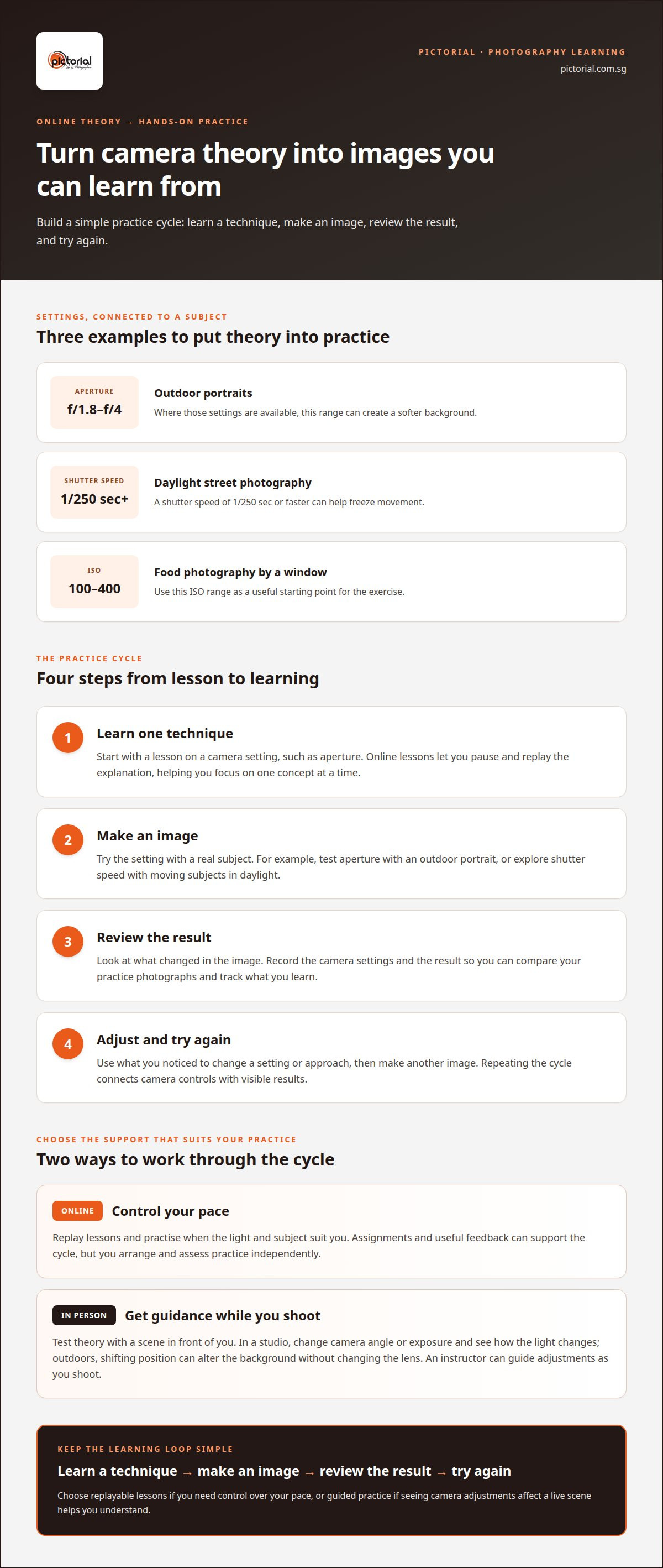
Online lessons make technical theory easy to revisit: pause, replay, and practise one concept at a time. A lesson on aperture, for example, can explain how the setting affects depth of field before you try it with your own camera. This approach suits learners who prefer to understand a technique before applying it.
Specific camera settings become clearer when connected to a subject and a result. For outdoor portraits, an aperture of f/1.8-f/4 can create a softer background where those settings are available. For daylight street photography, a shutter speed of 1/250 sec or faster can help freeze movement. For food photography by a window, ISO 100-400 is a useful starting range. These examples turn abstract numbers into practical choices.
Are photography course fees in Singapore eligible for SkillsFuture funding? Not automatically. Eligibility depends on the specific course and whether it is approved for funding. SkillsFuture Credit isn’t offered for Pictorial’s photography courses, so don’t assume you can use it to pay the fees.
An in-person workshop lets you test theory with a scene in front of you. In a studio, change the camera angle or exposure and see how the light changes across your subject. Outdoors, shifting your position can alter the background without changing the lens. This immediate practice connects camera controls with visible results; online learning leaves you to arrange and assess these tests independently.
Flexible scheduling is a clear advantage of learning at home. Fit a short lesson around work or family commitments, then practise when the light and subject suit you. For instance, photograph food by a window at different times and compare the images. A classroom follows its scheduled lesson, creating a shared pace but leaving less freedom to pause and repeat each exercise.
Skills develop through a cycle: learn a technique, make an image, review the result, and try again. Online courses can support this when lessons include assignments and useful feedback. In-person teaching can guide adjustments as you shoot, such as changing shutter speed when a moving subject blurs. The better format depends on whether you need control over your pace or direct support during practice.
Choose online theory if replaying lessons helps you learn, and set aside time to test each technique. Choose a workshop if seeing how camera adjustments affect a live scene helps you understand. Either way, record the settings and results for your practice images; comparing your notes makes progress easier to track.
In short: Is an online photography course worth it?
An online course can suit you if its lessons fit your schedule and include practical assignments. The right format depends on your circumstances, the skills you want to develop, and how you plan to use photography.
In Singapore, course formats vary by school and course. A course offers both online and in-person classes only when its description includes both delivery modes, rather than online lessons alone or classroom sessions alone.
Online classes can work well for beginners who are able to practise between lessons. Clear instruction on camera settings, paired with assignments, gives you a way to apply each technique and identify where you need more guidance.
Before enrolling in Singapore, review the teaching format, lesson topics, practice opportunities, instructor feedback, schedule, and equipment requirements. For example, check whether assignments involve taking photographs, and whether feedback addresses composition or camera settings.
Choosing by Personal Circumstances
Your routine and preferred pace can help you choose a suitable format. If work shifts or family commitments make fixed sessions difficult, recorded lessons let you study at home and return to a camera technique when time allows. If you learn by trying a setting and asking questions immediately, scheduled in-person teaching may fit better. Choose a course rhythm that matches the time you can genuinely set aside.
Equipment matters too. Before enrolling, check whether practice requires your own camera or whether suitable equipment is available during lessons. Then consider whether you can make time to shoot regularly. An online assignment to photograph a moving subject is useful only if you can practise, review the image, and try again.
Choosing by Career Goals
Your goals shape what you need from a course. Someone exploring portrait photography may value guided practice with framing, light, and subject direction. A learner building general camera confidence may prefer lessons on core techniques and assignments they can repeat independently. Choose based on the images you want to make, not just the course label.
If you’re preparing a portfolio, consider how the course helps you select and improve images. Feedback can identify recurring issues, such as inconsistent exposure or distracting backgrounds. If you’re considering a career change, practical exercises can help you test whether the work suits you before you commit to a larger learning plan.
Course duration and structure also affect value. A short course can focus on a specific skill, while a longer programme may cover more techniques and leave time for repeated assignments. Read the outline for topics, practice, and feedback, then decide whether the pace supports your progress. Check equipment requirements too: a course built around manual controls may require a camera with those settings.
Use this simple guide: choose online learning for flexible study and self-paced review; choose in-person learning for direct instruction during practice. If you want both, look for a course that clearly combines remote lessons with face-to-face sessions.
Self-directed versus guided hands-on practice
Photography skills grow through repeated shooting, not tutorials alone. Online learning lets you practise with your own subjects and equipment, while in-person guidance can help you adjust your technique as you work. The better fit depends on whether you can identify what went wrong in an image or need someone to demonstrate the next step.
For an online photography class, start with a camera or phone that lets you control the settings covered in the lessons. You’ll also need an internet-connected device to access course materials. Lessons may use a web browser or course app; specialised editing software isn’t essential for practising exposure, focus, or composition unless the course teaches editing.
Self-directed practice works best when each tutorial leads to a clear test. Photograph the same subject from two angles and compare the background, then change one camera setting and take another image. This simple sequence helps you connect your choices with visible results. Keep the images together to see whether the change improved focus, brightness, or framing.
Guided practice adds someone who can observe your technique as you shoot. If a portrait looks flat, an instructor can suggest moving your subject toward a window or turning their face toward the light. Make the adjustment immediately and compare the next image. A live demonstration can be easier to apply than matching a tutorial to a different room or subject.
Lighting and posing involve several connected decisions. For a portrait, notice where the light falls, ask your subject to turn slightly, and check how the shadows change across their face. In a self-directed lesson, you can repeat these steps at home and review the images afterward. In a workshop, someone can help you spot a distracting shadow or stiff pose while the subject is still in position.
Equipment access also shapes hands-on learning. Online students usually practise with the camera they have, so lessons can relate directly to familiar controls. This is useful when you want to master a specific camera, but menu names and button placement vary between models. A guided session can help you find the controls and use them in context, especially when the class provides a loan camera.
Choose self-directed tutorials if you can set a practice task, review the image, and try again without immediate help. Choose guided instruction if you want someone to demonstrate lighting, posing, or camera handling as you work. Either way, progress comes from making images, identifying one change, and testing it in the next shot.
Online versus in-person photography classes
Both formats teach camera skills, but organise practice and support differently. Compare how each handles instruction, feedback, scheduling, and the images you want to make.
Online Photography Classes
Online photography courses deliver lessons through digital materials such as recorded demonstrations, written guides, and assignments. Pause a tutorial, revisit a camera setting, then practise with a subject at home. This format suits learners who need flexible study or prefer to repeat a technique before moving on.
The main trade-off is that you practise away from the instructor. You may submit images for feedback, but can’t rely on an immediate demonstration while taking a photograph. Before choosing, look for clear assignments, a way to ask questions, and feedback that addresses technique rather than offering only general praise.
Online learning can also make it easier to explore more advanced topics at your own pace. Replay a lesson on exposure, for example, before trying the same setting in different lighting. Its value depends on whether you’ll make time to shoot, review the result, and apply what you learn next.
In-Person Photography Classes
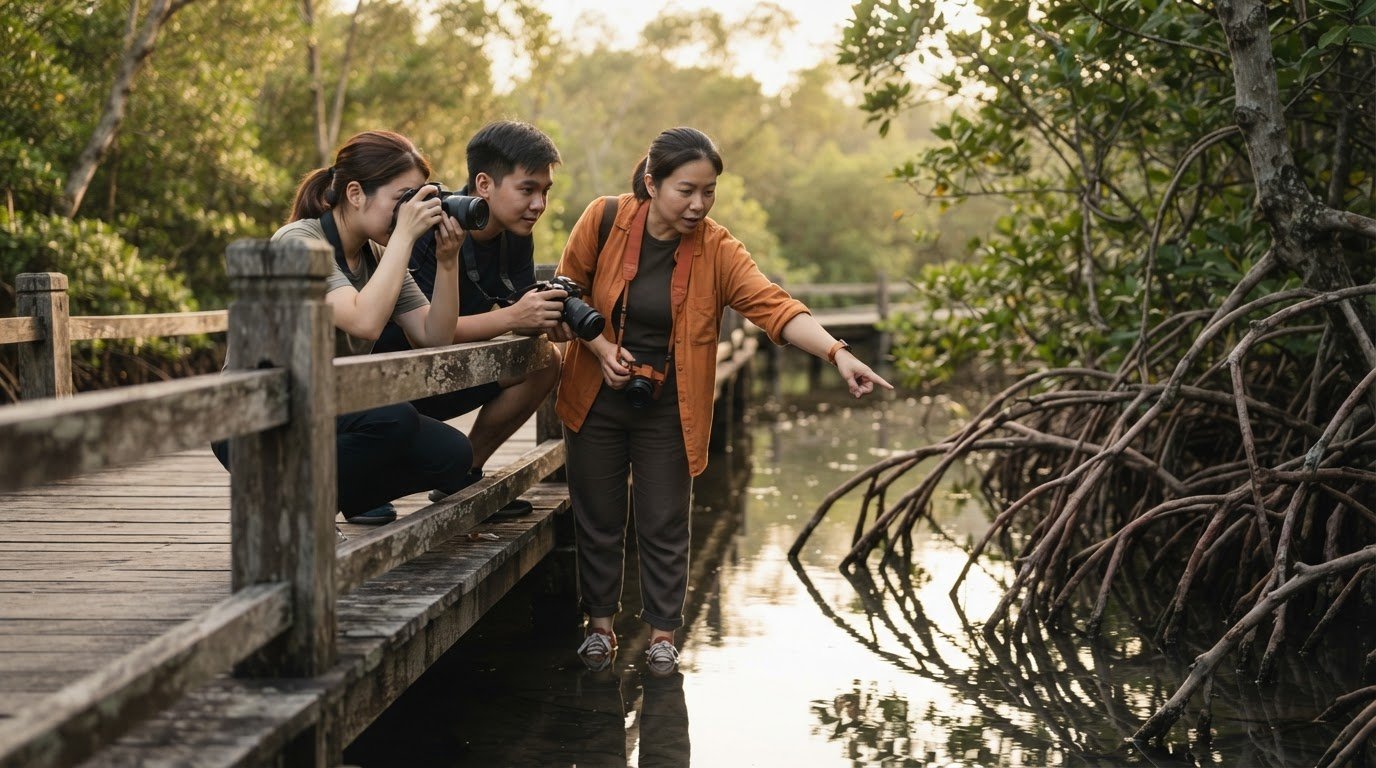
In-person classes bring students and instructors together for teaching and practical sessions. Adjust camera settings, take a photograph, and discuss the result while the scene is still available. Immediate discussion is especially useful when a demonstration needs to match your camera or the lighting in front of you.
Classroom learning can also create opportunities to hear tips from other students and compare different approaches. The 2024 Creative Education Survey reported that immersive photography workshop environments increased student output quality by 40% compared with local classroom environments. Treat that finding as context, not a promise about every workshop or student.
Scheduled sessions provide shared structure but require you to attend at set times. An outdoor practical session, for example, lets you test framing as the light changes. In a studio, you can see how moving a subject or light source changes the image.
Compare the same criteria for each format: instructor access, assignment feedback, practical shooting time, peer discussion, schedule, and equipment access. Online teaching gives you more control over when you study; in-person instruction offers live interaction during practice. Neither format guarantees progress. The course’s teaching methods and the time you spend applying them matter.
Choose online if flexible study and repeated lessons fit your routine. Choose in-person if a live demonstration and feedback during a shoot will help you put advice into practice. If you’re unsure, think about the next photograph you want to make, whether it’s a portrait, a street scene, or an image in controlled studio lighting. Pick the format that gives you a practical way to learn that skill.
Explore photography course options
Pictorial
Pictorial offers hands-on photography courses in Singapore for learners who want to practise with guidance. Small groups of up to three participants allow for personalised support and practical outdoor shooting. You can bring your own camera or use a complimentary loaner camera while learning core skills such as aperture, shutter speed, and ISO.
Whether you’re starting with a Photography Starter Session, exploring Mobile Photography Essentials, or building broader skills through a Complete Photography Course, your next step depends on what you want to learn and how you prefer to practise. In-person lessons suit you if you want to try camera settings during a shoot and receive guidance as you work.
Contact Pictorial to discuss which photography course suits your learning goals.
Choose the learning path that keeps you practising
The best choice is the format that helps you keep making photographs after each lesson. If flexible study keeps you engaged, practise one technique at a time. If you learn through direct instruction, choose a setting where you can ask questions as you shoot. In either case, let the images you want to create guide your next step.
Choosing between an online photography class and an in-person format is easier when you focus on how you learn, rather than which option sounds more impressive. Pictorial’s Photography Starter Session, Intermediate Photography Course, and Mobile Photography Essentials offer different starting points. Consider what you want to photograph and what kind of guidance would help you move forward.
Take it one photograph at a time. With steady practice and a learning format that suits you, camera settings can become familiar tools for expressing what you see.
Frequently Asked Questions
Decision Framework: Which Path Elevates Your Career?
No class format alone can advance a photography career; choose one that supports the work you want to produce. If you’re aiming for event photography, practise anticipating movement and capturing decisive moments. For product photography, build consistency in framing and light. Then consider whether structured lessons, instructor feedback, or flexible independent practice will help you create and refine relevant images alongside your other commitments.
What are the pros and cons of online vs in-person photography classes?
Online classes offer flexible access to lessons, which helps if your schedule changes or you want to revisit a topic. The trade-off is that practice and troubleshooting happen away from a live instructor. In-person classes provide direct conversation and shared learning but require attendance at scheduled sessions. Choose online if you can work through a technical exercise independently; choose in-person if live demonstrations help you learn.
What photography skills are easier to learn in person than online?
Skills that depend on observing a changing scene can be easier to practise with an instructor beside you. During a portrait, for example, test how your subject’s position changes facial shadows, then adjust your framing while the light is similar. A demonstration can also make unfamiliar camera controls easier to handle. These skills can be learned online, too, but independent practice means diagnosing each result yourself.
Which photography courses in Singapore offer online and in-person classes?
A course offers both formats only if its description lists online and in-person classes. Review the delivery modes before enrolling.

Disclaimer
© Pictorial | All Rights Reserved.