
Is a Photography Course Worth It for Skills Beyond the Phone?
A better camera isn’t the first thing that makes a stronger photograph. Whether a photography course is worth it in 2026 depends on what you want to learn: it can be valuable if you need practical guidance, feedback and a clear way to practise, while self-directed learning may suit you if you’re comfortable setting your own goals and reviewing your work.
It’s fair to wonder whether a course can teach you anything your phone or AI tools can’t already do. They can help you capture and improve images, but learning to notice light, shape a frame and make deliberate choices gives you skills you can carry between devices.
This article compares structured courses with learning on your own, explains what photography can teach beyond using a smartphone, and considers where those skills may lead. You’ll also find practical criteria for choosing a learning path that fits your interests, whether you take pictures for yourself or are exploring creative work.
Key Takeaways
- A course can help you build practical photography skills through guided practice and feedback, while self-directed study depends more on your own structure and review habits.
- Phones and AI can support image-making, but learning to read light and compose deliberately gives you creative control across devices.
- Photography skills can transfer to roles in content, social media, events and marketing, where visual storytelling matters.
- Compare online and in-person learning by the kind of practice, feedback and personal guidance that helps you learn best.
- For a guided start in Singapore, Pictorial’s Photography Starter Session offers a way to explore the fundamentals through hands-on learning.
Competition from smartphones and AI
Smartphones already make photography part of daily life. In 2026, 92.5% of images captured are taken on smartphones. That figure shows how capable and accessible phone cameras have become. The equipment alone does not decide whether an image holds attention.
A phone is useful for learning because it’s usually close at hand. Photograph the same subject in direct sun, open shade and window light. Notice how the light’s direction and softness change the mood, then move and compare the background. These exercises build observation skills before you start adjusting camera settings.
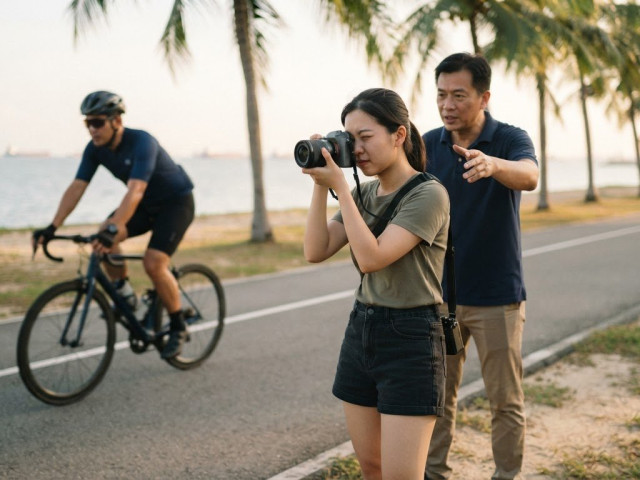
Dedicated cameras offer more direct controls, not automatic artistic ability. Learning ISO, aperture and shutter speed helps you understand how exposure and motion interact. A faster shutter, for example, can help freeze a moving cyclist, while a wider aperture can soften the background. Understanding these choices can also inform how you compose with a phone.
AI tools can support creative work without replacing the photographer. They may help sort images or generate visual ideas, while you still choose the subject, timing, framing and feeling. A course is most useful when it helps you make those decisions deliberately, rather than relying on software to repair every missed opportunity.
Try a simple exercise: photograph one subject from different viewpoints, in different light and with different framing. Compare the results and decide which choices communicate your idea most clearly. This shows what your device can do and what your decisions contribute. Guided photography lessons can help you develop these foundations through practice.
You don’t need to buy a camera before taking a course: students can use their own camera or borrow a complimentary loaner camera. Course fees depend on the selected course and are provided after a quote request; equipment needs depend on whether you use your own camera or a loaner.
So, is a photography course worth it in 2026? It can be, if you want to understand why an image works and practise making those choices across devices. A phone remains a capable tool, and AI can assist your process. Learning light, composition, and exposure gives you more control over the result, regardless of the camera you carry.
For anyone considering photography as more than a personal interest, employment prospects may also be part of the decision. Photography employment is projected to grow 4% from 2022 to 2032. That projection is one consideration, not a guarantee of work for any individual. Developing a deliberate approach to light, composition, and exposure can help you make stronger images and explain the choices behind them.
As you practise, note what you tried and what you would change next time. Reviewing your images can reveal patterns in your decisions and help identify what to work on. A course can give your practice structure, while your phone or camera lets you apply what you learn. The aim isn’t simply to make more images, but to become more intentional about the ones you create.
Structured study versus self-directed learning
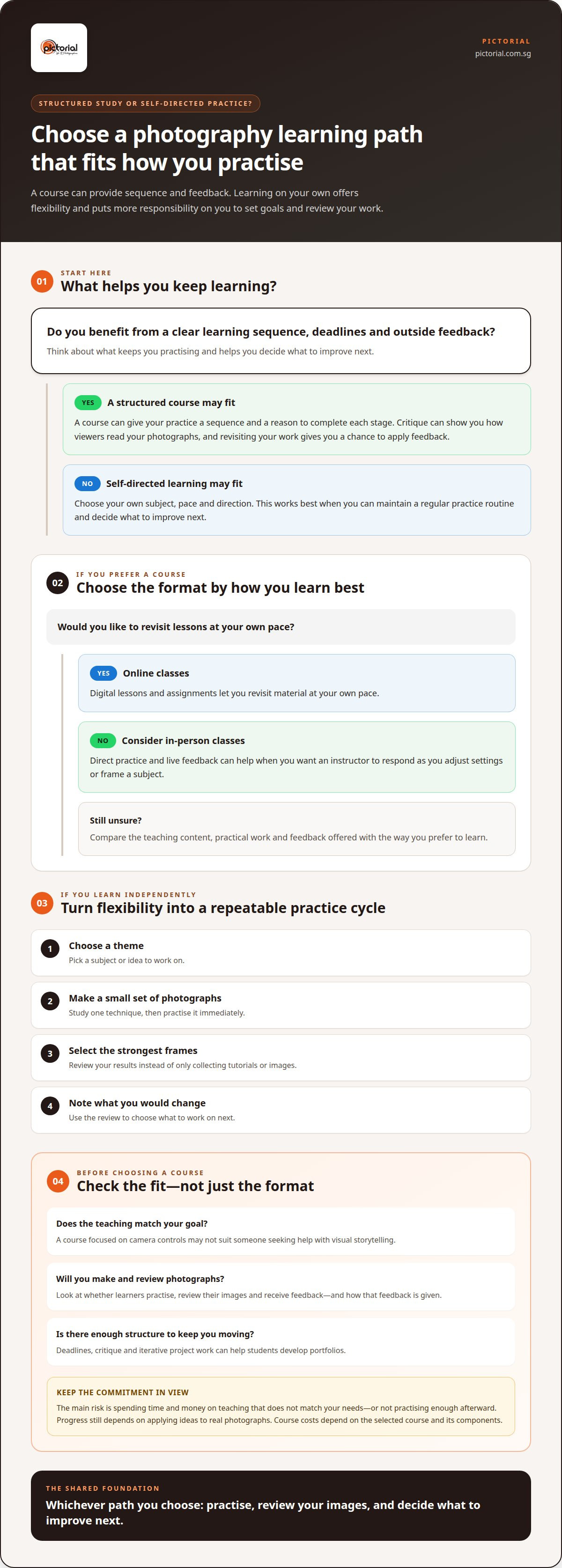
Structured learning gives photography practice a sequence; self-directed study lets you set the pace and direction. The better fit depends on how you learn and what helps you keep practising.
Online and in-person class effectiveness
Online classes use digital lessons and assignments; in-person classes add direct practice and live feedback. Online study can suit learners who want to revisit material at their own pace. In person, an instructor can respond as you adjust settings or frame a subject. Consider whether you learn best by replaying explanations or practising with guidance alongside you.
Course selection checks
A course selection check is a comparison of its teaching approach, practice and feedback against your learning goal. It matters because a course focused on camera controls may not suit someone seeking help with visual storytelling. Before choosing, look at the topics covered, whether learners make and review photographs, and how feedback is given. A useful structure includes deadlines, critique and iterative project work, which can help students develop portfolios.
Risks of paying for a course
The main risk is committing time and money to teaching that doesn’t match your needs or receive enough practice afterward. A course can explain exposure, but progress still depends on applying the ideas to real photographs. Consider the course format, teaching content and practical components when assessing the financial commitment. Cost details are provided after a quote request and depend on the course and its components.
Self-directed learning is flexible. Choose a subject, find a lesson on one technique, then practise it immediately. For example, study backlighting, photograph a subject near a window and compare the result with a front-lit image. This approach works best when you can maintain a regular practice routine and decide what to improve next.
The challenge is choosing which lesson to follow and judging whether a change improved the image. Without deadlines, it’s easy to keep watching tutorials instead of finishing a project. Give yourself a simple structure: choose a theme, make a small set of photographs, select the strongest frames and note what you’d change. This turns casual practice into a body of work.
Structured courses can provide a learning sequence and a reason to complete each stage. Critique can show you how viewers read your photographs, while revisiting your work gives you a chance to apply feedback rather than simply collect advice. If you prefer independent study, use the same cycle yourself. If a clear path and outside feedback help you follow through, a course may be worth considering.
Transferable skills and adjacent careers
Photography practice can build more than camera technique. In Singapore, visual storytelling and a clear portfolio can support work across creative roles.
Beginner photography course skills
Beginner photography courses teach practical methods for making images and communicating ideas visually. The U.S. Bureau of Labor Statistics describes basic courses as covering equipment, processes, and techniques. For a learner, these foundations matter because a photograph often needs to explain something quickly. A café owner, for example, might use a carefully framed image to show a dish’s texture and setting.
Photography careers and freelance income
A photography course can develop skills that support photography work and related roles, but course attendance alone doesn’t build a working portfolio. In Singapore, a learner can practise a niche such as food, products, or events, then select images that show a consistent approach. Understanding the creative and business sides of the work also helps turn skill into a clearer freelance offer.
Think beyond job titles that include “photographer.” Content, social media, events and marketing roles may also use photography. A small-business social media role, for example, might call for someone who can plan a visual story, take still photographs and create moving-image content. These adjacent options make photography useful even when a dedicated photography job isn’t your immediate goal.
Build portfolio examples around the work you want to do. For food photography, create a short series showing ingredients, preparation and the finished dish. For events, practise capturing people, details and atmosphere as a sequence. These projects show more than technical control: they give a potential client or employer examples of your creative choices.
Some photography-related roles ask for storytelling, experience with photographic and moving-image software, and examples of creativity. A portfolio can bring those elements together: pair images with a short explanation of the intended audience and message. LinkedIn can help you find relevant job listings by searching for photography skills and titles such as content creator or social media executive.
Freelance work also involves decisions beyond making images. A product photographer, for instance, needs to understand what the business wants each image to communicate and how the photographs will be used. Choosing a niche helps shape that offer; project planning and clear communication help clients understand the work. Learning these habits alongside photography can make your skills more useful in Singapore’s varied creative work.
A degree alone doesn’t determine career success. A strong portfolio, a useful specialisation and an understanding of creative and business work also matter. A course can provide a setting to practise and develop those foundations, while your projects show how you apply them to real briefs and audiences.
What skills do photography courses teach beginners in 2026?
Beginner courses connect camera controls with the choices that shape a photograph. The U.S. Bureau of Labor Statistics describes basic photography courses as covering equipment, processes, and techniques. In practice, that could mean learning how a camera records an image, then using its controls to capture a bright window scene without losing detail.
Exposure is one practical foundation. ISO, aperture and shutter speed each affect how a camera records light, but they shape the image differently. A faster shutter, for example, can make a moving cyclist look sharp, while a slower one can show motion. Understanding how the controls interact helps you choose how to photograph a scene.
Composition is about arranging what appears inside the frame. Photograph a cup on a table at eye level, then from above. The second view may reveal its shape and the table setting, while the first emphasises the cup against its background. Comparing the images makes framing a deliberate choice rather than a quick camera-pointing habit.
Light is another core subject. Photograph the same object beside a window, then move it farther away or turn it toward the light. Notice where shadows fall and which details remain visible. In Singapore, bright outdoor conditions can create strong contrasts, so learning to find shade or adjust your position helps preserve detail in a subject’s highlights and shadows.
Courses can also teach photography as a visual language. A sequence of images can explain a process, such as preparing a meal, more clearly than one isolated frame. Practise choosing what to show, what to leave outside the frame and how one photograph leads into another. These choices help an image communicate an idea to its viewer.
Review and feedback turn practice into learning. Compare two photographs of the same subject, then decide which has a clearer focal point and why. Critique can draw attention to a distracting background or a crop that cuts through an important detail. Revising an image teaches you to make changes with purpose, rather than simply taking more photographs.
Practical courses can also build habits that transfer beyond the camera. Planning a short photo series involves choosing a subject, creating a sequence and selecting images that work together. Explaining those choices strengthens visual storytelling and communication. In a content role, for example, a set of photographs can guide viewers through a product’s use or a small business’s daily work.
For beginners, the useful outcome isn’t memorising terms alone. It’s being able to look at a scene, identify what matters and choose how to show it. Whether you photograph a street scene, a family meal or a product, these skills help you create images with clearer intent and communicate more confidently through photographs.
Are online photography courses as effective as in-person?
Online and in-person courses can teach the same photography concepts through different kinds of practice. With an online lesson, you can pause while testing aperture settings on a camera, then replay the explanation. This suits learners who need time to absorb new terms. Its value depends on whether lessons include assignments and useful feedback, not just demonstrations.
Online study works well for reviewing a specific technique at home. Watch a lesson about exposure, photograph a window scene and compare your results with the demonstration. You can repeat the exercise and revisit difficult steps. However, a screen can’t respond as you adjust your camera or explain why your test image looks different.
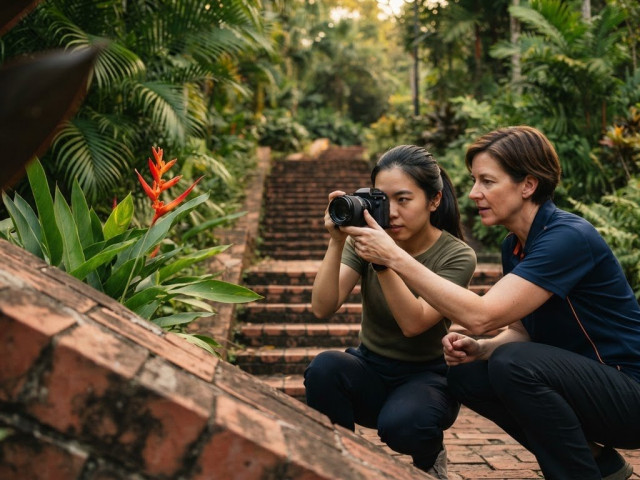
In-person teaching makes interaction immediate. An instructor can watch you change settings, see the resulting frame and explain an adjustment on the spot. During an outdoor exercise, you might photograph a shaded subject, then move into brighter light. The instructor can point out how your exposure or position affects the image while the scene is still in front of you.
Practice conditions also shape the experience. At home, you can repeat a still-life exercise with a cup, a window and a table. In person, a guided shoot may ask you to find a subject, choose a background and adjust your approach as the light changes. Both settings build skills, but each offers different ways to respond to a scene.
Choose the format that fits what you need most. If you mainly want clear explanations of camera controls, online lessons can provide a flexible reference. If you’re unsure how to apply those controls, value live feedback or learn by doing, in-person guidance can make each adjustment easier to understand. Look for practical tasks and a way to review your images.
A useful course in either format connects each lesson to a photograph you make. After learning about composition, for instance, photograph the same subject from two viewpoints. Compare which frame directs attention more clearly. Online learners can share work through assignments; in-person learners can discuss their images with an instructor during the session.
You can combine formats without treating them as rivals. Use online material to revisit terms such as shutter speed, then practise the setting during a guided shoot. For example, try freezing a moving subject after studying the technique. Your choice comes down to your learning habits, the feedback available and whether you’ll make photographs between lessons.
That practice can matter when photography supports a real-world goal, too. Professional photos of real estate properties are associated with 47% more online views, showing how image quality can influence audience engagement. A course cannot guarantee that outcome, but learning to work with light, composition, and exposure can help you make more deliberate images and assess whether they serve their purpose.
Pictorial: Photography Starter Session
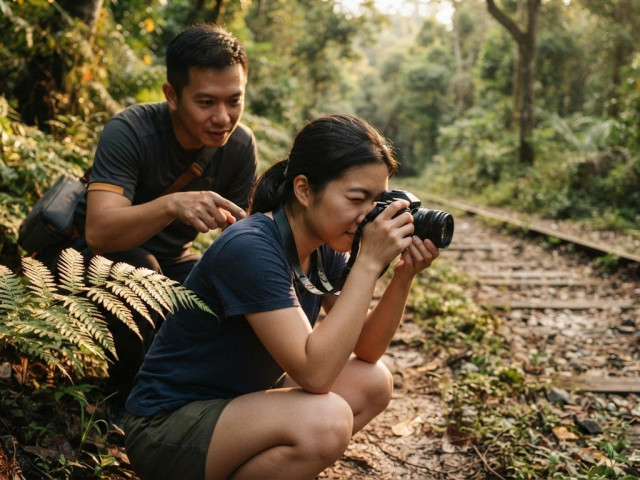
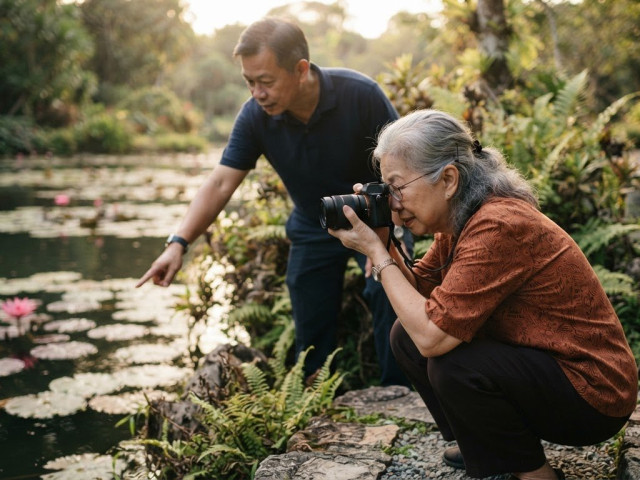
Pictorial’s Photography Starter Session gives beginners a practical way to try photography with guidance. Small groups of up to three participants allow for personalised support during outdoor shooting. You can use your own camera or borrow a complimentary camera, then practise core controls such as ISO, aperture, and shutter speed.
The Photography Starter Session suits people who want hands-on guidance before choosing a longer learning path. As your interests develop, Mobile Photography Essentials focuses on phone photography, while the Intermediate Photography Course suits learners ready to build on their existing skills.
Contact Pictorial to discuss whether the Photography Starter Session suits your learning goals.
Choose your next step with confidence
Whether a photography course is worth it in 2026 depends on the kind of progress you want to make. You don’t need to settle on a career goal before learning. Start with one clear aim, such as making more thoughtful travel photographs or understanding your camera’s controls. That gives your practice direction without making photography feel like another obligation.
If you’re ready to learn with guidance, Pictorial offers the Photography Starter Session, Intermediate Photography Course, and Mobile Photography Essentials. Choose a starting point based on whether you want to explore photography, build on existing skills, or focus on phone photography. A first lesson can help turn curiosity into a regular practice, one considered frame at a time.
Keep noticing the light, making photographs and learning from what you see. Your next strong image can begin with a simple decision to practise.
Frequently Asked Questions
Is a photography course worth it compared with learning photography for free online?
Free online lessons may be enough if you can find reliable explanations and apply them independently. A course may be worthwhile if you keep repeating the same mistake, such as overexposing bright skies, and need help identifying why. Before committing, try a free tutorial with one specific photograph in mind. If you still can’t diagnose the result or choose an adjustment, guided instruction may help you move forward.
What camera equipment is needed for a photography course, and how much does it cost?
You can use your own camera or borrow a complimentary loaner camera. Course fees depend on the selected course and are provided after a quote request.

Disclaimer
© Pictorial | All Rights Reserved.