
Photography for Retirees Singapore: Find a Style That Fits You
You don’t need an expensive camera or a technical background to make photography part of retirement. Photography for retirees in Singapore can begin with a smartphone and develop at a comfortable pace. It’s a way to see familiar places differently, express your perspective, and share moments with others.
Camera settings or the idea of joining a class may feel intimidating at first. You don’t have to master everything at once: regular practice can build confidence, and sharing photos can create new opportunities for conversation and connection.
This guide explores how photography can fit into everyday retirement, from low-cost ways to begin and flexible projects to patient, practical guidance. You’ll find ways to choose a style that suits your interests, whether you want to photograph familiar scenes, make images with family, or slow down and observe the world around you.
Key Takeaways
- Use photography to notice everyday moments and create fresh ways to share stories with family and neighbours.
- Develop a personal style by choosing subjects and approaches that reflect what you enjoy observing.
- Begin with a smartphone and practise with digital images before deciding whether dedicated camera equipment suits you.
- Shape photography around your preferred pace, schedule and interests, from neighbourhood walks to personal projects.
- Build confidence with patient, practical guidance that makes camera basics easier to learn through hands-on practice.
1. Photography’s social and emotional benefits in retirement
Retirement can create room for interests that connect you with people and familiar surroundings. Photography gives an ordinary outing a focus: notice a shopfront, frame a detail, then share the image with someone who remembers it. A walk can become a chance to gather stories, not just scenery. The camera helps you pay attention to what catches your eye, while a photograph gives others an easy starting point for conversation. Even a picture of a favourite meal can prompt family stories.
That exchange can help when social routines change. A photograph of a market visit, community garden, or family gathering can prompt conversation without requiring a formal occasion. In a community photography project, senior residents were paired with volunteer mentors as they photographed familiar surroundings. You can borrow that idea informally: walk with a friend, choose one detail each, then compare what you noticed over tea. Sharing the process makes the outing collaborative, while discussing each frame helps you learn how another person sees the same scene.
Photography can also be a form of personal expression. Two people might photograph the same corridor differently: one notices sunlight on the floor, while another frames neighbours chatting nearby. Neither image has to be technically perfect to carry meaning. Choose a subject, take a few frames from different angles, then select the one that best reflects your experience. These choices help you develop a visual record shaped by your own attention, not a rulebook.
What discounts or concessions are available to seniors for photography courses and attractions in Singapore? There is no single senior concession that applies across all courses and attractions; each organiser or venue sets its own terms. To begin without paying for an activity, photograph familiar public spaces with a smartphone and build a regular habit. Decide whether you want guided learning, an attraction visit, or an independent outing, since that choice determines what kind of concession to look for.
Photography for retirees in Singapore can offer a gentle mental challenge through observation and practice. A University of Exeter study discussed vulnerable older adults aged 60 to 95, while community photography projects show how learning can also happen alongside others. Begin with one manageable subject, such as a plant or a familiar building. Pause to notice its shape, light, or texture, then share a photograph with a friend or family member. That simple cycle connects careful looking with conversation and self-expression. Over time, your images can hold small details of daily life that might otherwise pass unnoticed, and give you a personal way to revisit them.
2. Developing a personal photographic style
Your style grows from the subjects you choose and the way you frame them. Start with one familiar subject, such as a HDB corridor, coffee cup, or row of plants. Photograph it from a few angles, then notice which image feels most like your view. You might prefer close details, wide scenes, strong lines, or people in motion. These recurring choices matter more than copying another photographer’s camera settings. A personal style emerges through deliberate practice.
Try a simple subject exercise on an ordinary outing. At a wet market, focus on colour, hands arranging produce, or shoppers moving between stalls. Choose one idea before lifting the camera. This gives each moment a purpose and helps reduce distracting details. On another day, photograph the same subject in different light. Compare what changes when you move closer, step back, or shift position. Keep the images that best express what you noticed.
A short visual routine can help you recognise what draws your attention. Make a small series around one theme, such as doorways, neighbourhood textures, or morning shadows. For each photograph, ask yourself:
- What first caught my eye?
- Does the frame show that detail clearly?
- Would a closer or wider view make the feeling stronger?
- Which image would I want to show someone, and why?
These questions make reviewing a practical way to learn, not a test of whether an image is good.
Choose a pace that lets you look carefully. In a public garden, photograph leaf shapes rather than trying to capture the whole landscape. At a bus stop, wait for a moment when a person, sign, and shadow form a balanced scene. You don’t need dozens of frames. A few considered photographs make it easier to compare your choices and see whether you prefer quiet compositions, lively scenes, or small details.
Keep a simple record as your preferences emerge. After an outing, select a few images and add a short note beside each: “I like the warm light,” or “The empty space makes the subject stand out.” After several walks, look for recurring choices in subject, distance, light, and framing. If you enjoy close details, plan another walk around textures. If you prefer people and movement, look for everyday scenes with activity. Let your style develop from genuine interest, one photograph at a time.
A longer project gives a recurring subject room to change while keeping your attention focused. One photographer hoped to develop Aging Singapore into a long-term project, exhibiting photographs of different seniors over time. Thinking of your work as an ongoing series can help you notice which choices remain consistent and which evolve as you keep photographing.
A subject can also guide you towards a particular way of seeing. NParks worked with the Alzheimer’s Disease Association to develop customised therapeutic programmes at the Therapeutic Garden @ HortPark. When planning a series, consider what draws you to the subject and how your photographs can reflect that interest. Let the theme provide direction while each image captures what you noticed in the moment.
3. Digital photography and affordable equipment
Retirees can learn smartphone photography through gradual practice, online tutorials, community workshops, and photography clubs. Start with a familiar subject, such as a plant near your window, and practise framing it before changing settings. A smartphone is enough to explore composition and light, so you don’t need to buy a dedicated camera before discovering what you enjoy photographing.
Digital photography makes practice straightforward because you can review each image immediately. At a waterfront promenade, take a photograph of the skyline, then check for distracting edges or a tilted horizon. Adjust your position and try again. This quick feedback shows how small changes affect the result. Unlike film photography, digital practice doesn’t add film costs with every attempt.
Use your phone’s built-in camera before adding accessories. Tap the screen to focus attention on your subject, hold the device steadily, and take another frame if the first feels rushed. In a shaded garden, move towards brighter light rather than relying on digital effects. Try both horizontal and vertical framing for a flower or sculpture. Comparing the versions shows how framing changes an image’s mood and balance.
A simple routine can make phone practice easier to repeat:
- Choose one subject, such as a bowl of fruit or a community noticeboard.
- Take a wider frame, then move closer for a detail.
- Review both images and note which shows your subject clearly.
- Keep the stronger frame in a clearly named album for later comparison.
This short exercise gives each outing a purpose without requiring extra equipment.
Before buying a dedicated camera, identify what your phone cannot do comfortably. If you want more control over exposure, learn how ISO, aperture, and shutter speed affect brightness, depth, and motion. Practising with guidance can help you choose equipment based on a real need, not features that sound impressive. A workshop can also help you build foundational skills before investing in a dedicated camera.
Make digital files manageable from the start. Create albums by subject or outing, such as “Park walks” or “Family celebrations,” and remove accidental duplicates when reviewing your photos. Back them up regularly so a lost or damaged phone doesn’t take every image with it. Keep a favourite image as a personal project, then compare it with later attempts. Returning to the same subject makes it easier to notice changes in framing, focus, and light.
Tan Qiangsheng reportedly spent $1,000 on a Nikon long-zoom camera a few years ago to take clearer photographs as evidence. That example shows how a dedicated camera may suit a particular purpose, but it does not mean every learner needs one. Before spending, consider whether carrying and operating another device would make photography more enjoyable or simply add complexity.
Borrowing or trying equipment through a club or workshop can help you assess its size, controls, and usefulness. Choose based on the pictures you want to make, and let regular practice, not pressure to own advanced gear, guide any purchase.

4. Flexible photography pursuits for retirees
Retirement lets you choose a photography routine that fits your energy and interests. A short walk, personal photo project, or structured lesson can each provide useful practice. Focus on architecture, plants, family moments, or everyday scenes, and pause whenever you need. The best pursuit is one you can return to comfortably.
When choosing a photography class, consider the group size, practical access, teaching pace, and schedule. A class with hands-on practice can help you apply camera settings, while a convenient location and suitable session times make attendance easier to maintain. Beginner, smartphone, intermediate, and advanced classes give retirees different levels of structure to consider.
Singapore seniors can learn through beginner courses, mobile photography classes, intermediate lessons, online tutorials, community workshops, or photography clubs. Choose based on whether you want guided camera practice, phone techniques, or regular peer outings. A short course can suit someone testing an interest, while a club may suit someone who prefers ongoing projects.
SkillsFuture Credit should not be assumed to subsidise a photography class; only courses explicitly identified as eligible qualify for that funding. Community clubs offer learning activities, but the Seniors for Smart Nation course covered social media, online communication, and basic computing, rather than photography.
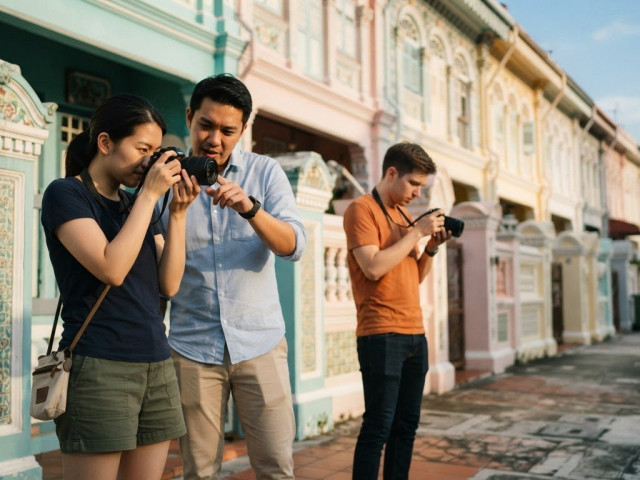
Look for photography clubs and groups in Singapore that welcome beginners and arrange outings at a comfortable pace. A walk around a familiar area is a simple first activity: members can photograph shopfronts, trees, or public art, then share their images. Peer feedback helps you see how others interpret the same scene.
For outings, consider places such as the Singapore Botanic Gardens or Marina Barrage, where gardens, paths, and open views offer varied subjects. Plan around route length, shade, places to rest, and the amount of walking involved. A nearby park or sheltered public area can also work well for a less demanding practice outing.
Museums, libraries, and community clubs can be useful places to look for photography activities and workshops for older learners. A suitable session should allow time to practise, explain camera steps clearly, and account for access and seating at the venue. Community workshops can also provide a gradual introduction without a commitment to a longer project.
Photography can remain flexible after a class ends. Photograph one subject during a regular walk, then share a small selection with a friend or group. If you’re interested in earning supplementary income, remember that local photo sessions, print sales, stock-image licensing, and visual content for small businesses all take time to develop. Start with a subject you enjoy, and let your routine grow from there.
5. Photographer’s session process and compassionate guidance
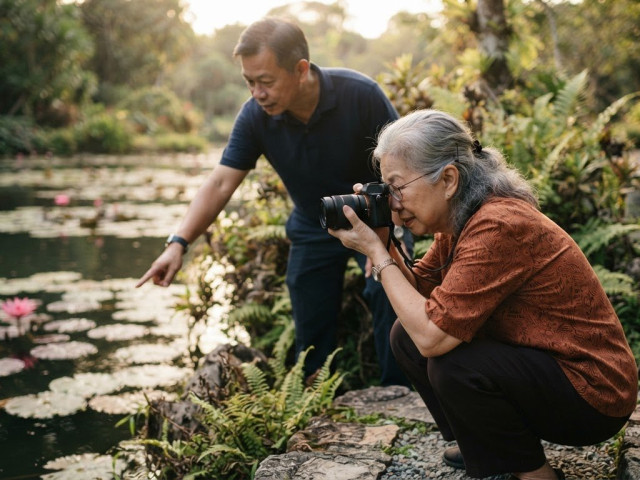
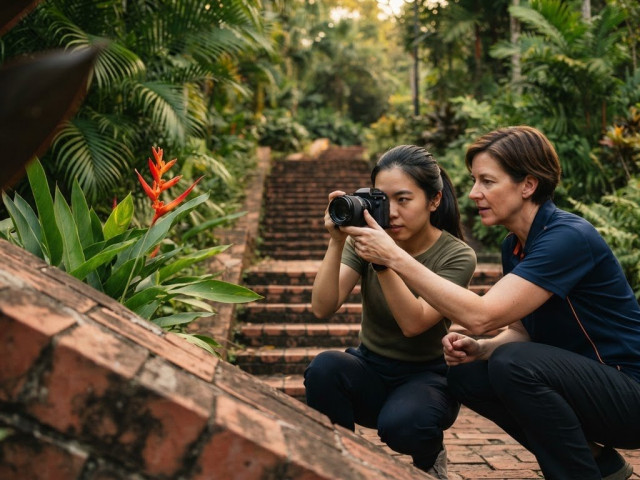
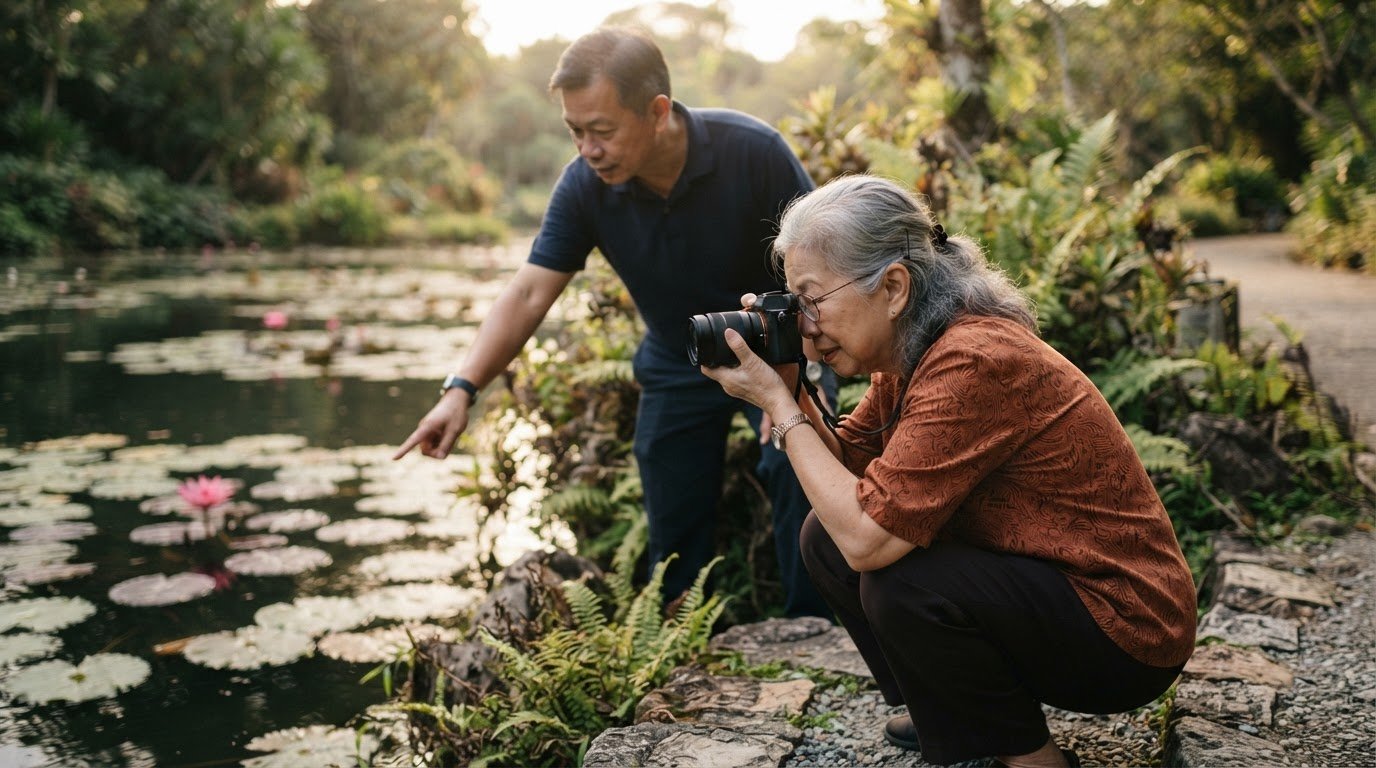
A good learning session makes room for observation, questions, and practice. An outdoor walk, for example, can begin with one simple task: frame a nearby tree, then notice how its shape changes from another viewpoint. A patient guide explains one adjustment at a time, such as changing the camera’s position or checking focus. This gives you time to understand each action before moving on.
The pace matters as much as the subject. During an outdoor family photo session, a photographer slowed down to accommodate two octogenarians. This shows how a session can adapt to participants rather than asking everyone to keep the same pace. Short pauses, nearby places to sit, and manageable walking can help people stay involved.
Clear guidance can also reduce the pressure to get every frame right. A session might follow a simple sequence: choose a subject, compose the frame, take a photograph, then review it together. If the image feels too busy, the guide can suggest moving closer or changing the angle. The learner then tries again and sees the effect directly. Each step builds understanding through practice, not through a long list of unfamiliar terms.
- Begin with a familiar subject. A shopfront or potted plant gives the learner time to practise without rushing.
- Explain one camera choice. Show how moving nearer changes the frame before introducing another technique.
- Pause for review. Compare two images and discuss which better shows the subject.
- Adapt the activity. Shorten the walk or change the subject if the group needs more time.
Patient teaching treats questions as part of the process. If holding a camera steady is difficult, it may help to rest your arms or support the device. If exposure is unclear, practise photographing the same subject in brighter and shadier spots. These adjustments keep the focus on learning, rather than making technical terms feel like a test.
Photography projects about ageing also show why respectful interaction matters. The planned Aging Singapore documentary included discussion of interactions with seniors, the ageing population, and stigma around old age. For a personal project, ask before photographing someone, explain what you hope to capture, and respect their choice if they prefer not to be photographed. That simple exchange keeps the person, not just the image, at the centre.
Choose guided practice if you want someone to demonstrate camera basics outdoors and help you apply them as you shoot. A calm pace, clear explanations, and room to try again can turn unfamiliar settings into a useful learning experience.
Explore a beginner photography workshop
Pictorial: Photography Starter Session
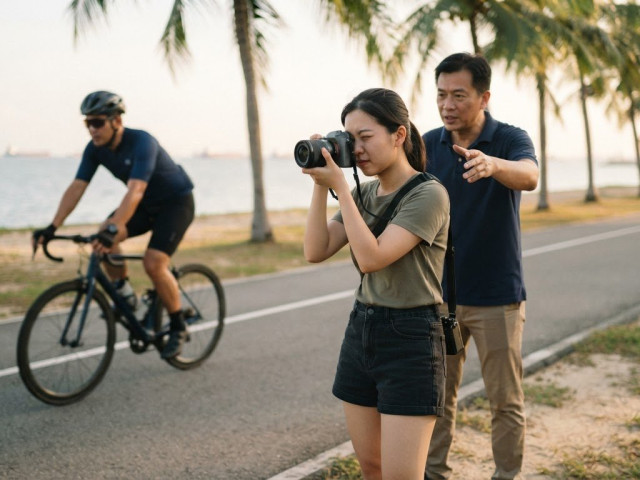
The Photography Starter Session offers a practical introduction to photography with guidance. It suits retirees who want to understand camera basics before choosing a longer course or investing in equipment. Hands-on outdoor practice takes place in small groups of up to three, and a complimentary camera loan is included if you need one. Learn how ISO, aperture, and shutter speed affect your photographs while practising in real surroundings.
If you prefer taking pictures with a phone, Mobile Photography Essentials offers a focused learning path. For broader study, the Complete Photography Course supports continued progress beyond the basics. Choose the course that best matches your interests and how you want to practise.
Explore Pictorial’s photography courses to choose a suitable next step.
Let Your Next Photograph Begin a New Routine
Choose one small intention for your next outing: notice a colour you usually pass, follow changing light, or capture a detail that carries a memory. A simple intention gives your attention somewhere to rest without turning photography into another task to complete. Let your images reflect what matters to you, not what you think a photographer is supposed to make.
For photography for retirees in Singapore, the next step can be as modest as bringing your phone on a familiar walk. If you’d value personal guidance as you build confidence, Pictorial’s learning options offer a way to keep progressing at your own pace. Contact the team to talk through a suitable session.
Stay curious, take the time you need, and let each photograph show you something worth noticing.
Frequently Asked Questions
What are the best beginner cameras or smartphones for retirees in Singapore, and how much do they cost?
The best starting choice is a smartphone you find comfortable to hold and use; you don’t need to buy a camera before practising. If you want a dedicated camera, prioritise a clear screen, accessible controls, and a grip that feels steady in your hands. Prices vary by model, condition, and included lens, so compare those factors. Pictorial includes a complimentary camera loan for students who need equipment for a course.

Disclaimer
© Pictorial | All Rights Reserved.