
How Much Are Photography Classes? See Average Prices and Fees
The format matters as much as the subject: a short workshop and ongoing training are different learning experiences, so their fees can differ. The practical answer to how much are photography classes in Singapore is that the cost depends on the type of class, its length, and whether you learn in a group or through individual instruction.
It’s reasonable to want a clear budget before you begin, especially when photography terms and camera settings feel unfamiliar. The price alone doesn’t show how much hands-on practice you’ll get or whether you’ll have time to work through the basics with guidance.
This guide explains what affects photography class fees, what to expect from in-person training and private lessons, and which additional costs may come into play. You’ll also see how to think about class format and practical instruction when deciding what fits your learning goals in Singapore.
Key Takeaways
- Class format and duration shape the cost, so compare what each in-person option includes, not just its headline fee.
- Private lessons offer individual attention, while group classes give you a chance to learn alongside other students.
- U.S. price ranges provide a reference for workshops, intensive courses, and private instruction, but they don’t set Singapore prices.
- Budget for possible extras, such as equipment or an ongoing training subscription, as well as the class itself.
- For a beginner course in Singapore, consider how much practical guidance and time to practise you’ll get when weighing the cost.
1. Live and in-person photography training
In-person photography training lets you practise with a camera and get feedback as you work. A setting such as ISO, aperture, or shutter speed affects the exposure you see on the screen. Instead of only reading about the principles, you can adjust a control, take a photograph, and see the result.
In Singapore, beginners can choose a Photography Starter Session or a Basic Photography Course, while advanced learners can consider an Intermediate Photography Course or Advanced Photography Masterclass. A basic photography course for beginners can help new learners practise camera controls before moving on to more demanding techniques.
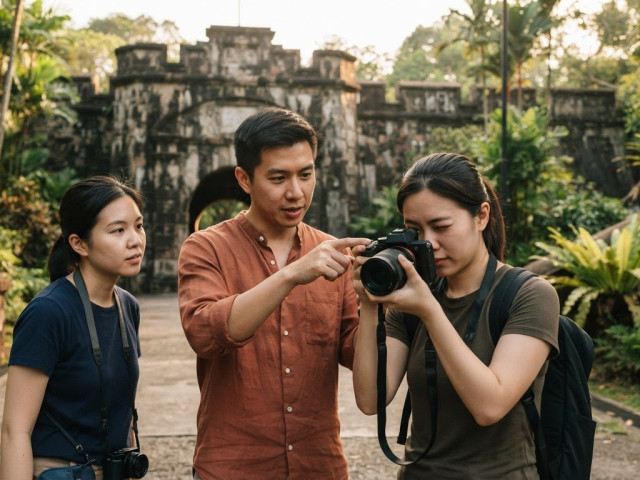
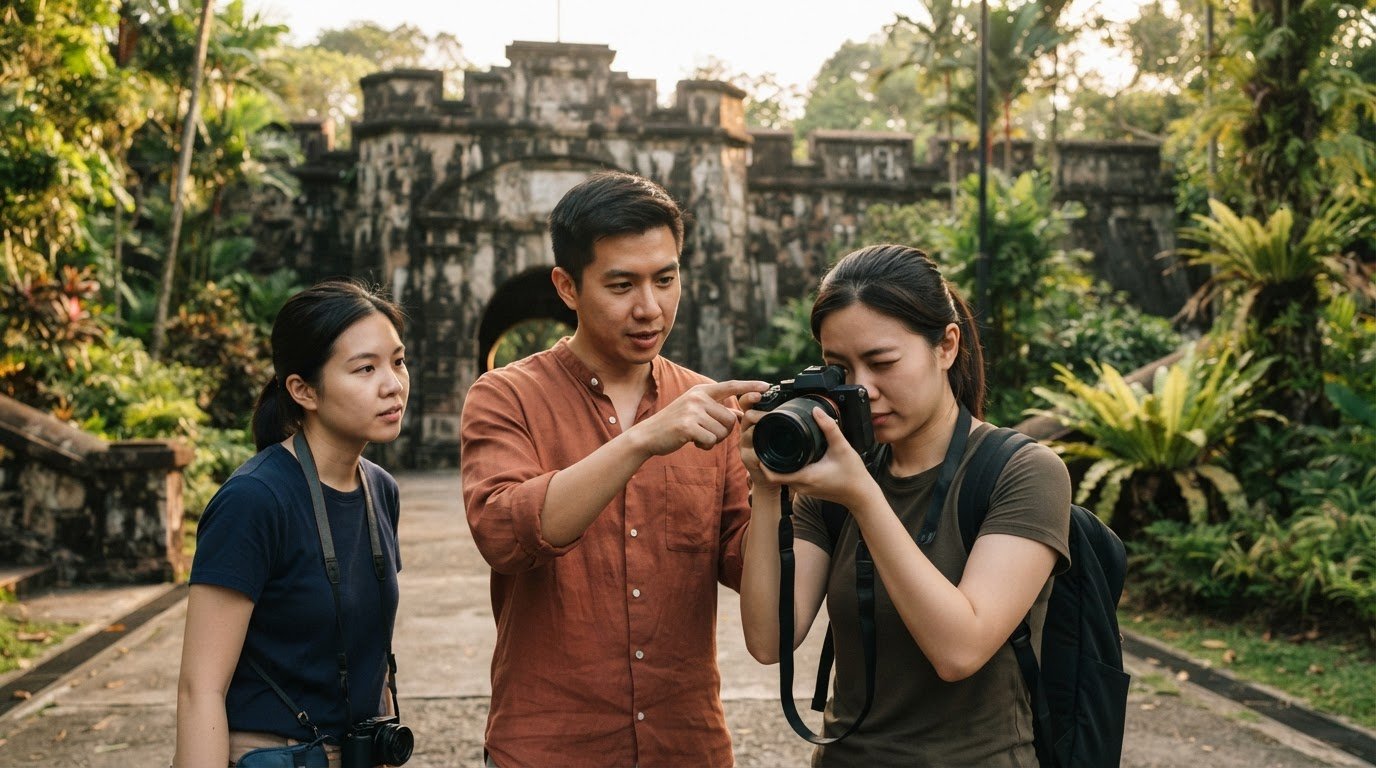
Practical details affect how useful a class feels. Small groups let the instructor observe each person’s camera handling, while outdoor practice provides changing light, backgrounds, and distances to work with. Pictorial limits group classes to three participants, supporting individual guidance during exercises. Complimentary camera loans are available if you don’t have your own camera.
During a practical session, you might set the exposure, then frame a subject using composition principles. The instructor can point out how moving closer, changing the angle, or adjusting a camera setting changes the image. That immediate feedback connects a technical choice to a visible result, whether you’re photographing a nearby object or a scene while travelling.
Class fees vary with the amount of teaching and practice included. A longer course can cover more camera controls and give you time to repeat a technique; a shorter session focuses on a narrower set of skills. Group or private format, outdoor instruction, equipment access, and course content all shape the learning experience. Compare these details, not just the word “photography.”
Before choosing, match the course to the skill you want to practise. If you’re learning the basics, look for direct guidance on exposure and composition. If you already use your camera comfortably, a course for developing photographers may be a better fit. In either case, live instruction gives you the chance to ask about a photograph, try a change, and understand why the image responds differently.
Price is another way to compare live options, but the amount makes most sense alongside what the course covers. That range reflects different amounts of instruction and different scopes of learning, so a lower fee does not necessarily describe the same experience as a comprehensive course. Consider whether you want focused practice with camera controls or instruction that also includes editing before deciding which format suits you.
It can help to identify the specific skills you hope to gain, then check whether the course description includes them. If your immediate goal is to practise making exposure and composition choices, a focused workshop may be enough. If you want camera use and editing covered together, a comprehensive course may be more relevant. Comparing the stated content with your learning goals keeps the fee in context and helps you choose an in-person class for the kind of practice and guidance you need.
2. Private and group photography lessons
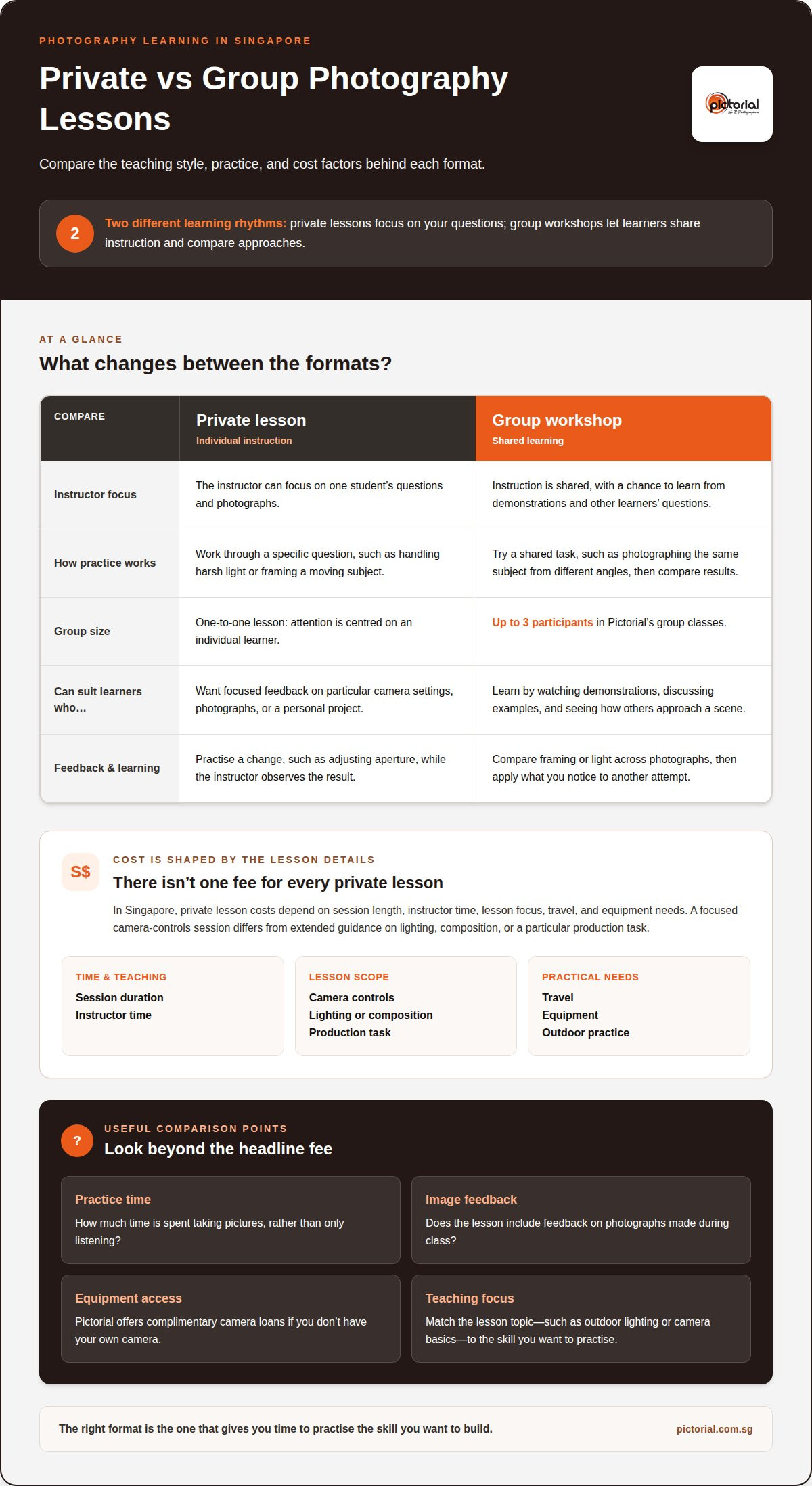
Private and group lessons offer different kinds of support behind the camera. In a private lesson, the instructor can focus on one student’s questions, such as handling harsh light or framing a moving subject. A group workshop offers shared instruction and the chance to see how other learners approach the same scene. Pictorial’s group classes are limited to three participants.
In Singapore, the cost of private photography lessons depends on session length, instructor time, lesson focus, travel, and equipment needs. There isn’t one fee that applies to every one-to-one lesson. A focused session on camera controls differs from extended guidance on lighting, composition, or a particular production task.
Individual instruction can suit beginners who want focused feedback. For example, you can bring a camera question and practise changing the aperture while the instructor observes the result. This keeps the lesson tied to your own photographs, rather than requiring you to follow every topic at the same pace as a larger class.
Group learning has a different rhythm. During a workshop, the instructor introduces a shared task, such as photographing the same subject from different angles. Students can compare how framing or light changes each photograph, then apply what they notice to their next attempt. You can also learn from questions raised by other participants.
To decide between formats, start with the kind of help you need. Choose individual attention if you want to work through specific camera settings or a personal project. A group lesson can be a good fit if you learn by watching demonstrations and discussing examples with other beginners. The teaching focus matters too: a class about outdoor lighting calls for different practice than one centred on camera basics.
Also consider what the fee covers. Session duration, outdoor practice, equipment access, travel, and the instructor’s preparation can affect the overall cost. Ask how much time is spent taking pictures, rather than only listening, and whether the lesson includes feedback on the images made during class. These details clarify the value of the teaching without assuming that private instruction is always the better choice.
For learners in Singapore who prefer guided practice in a small group, small-group photography workshops offer a way to learn through demonstrations and hands-on exercises. The right format is the one that gives you time to practise the skill you want to build.
3. Average prices for photography classes in the United States
U.S. class prices vary with teaching format and duration. These examples show why students should compare learning time and class structure, not just the total fee.
Private instruction has a wider spread. The instructor’s time and one-to-one attention contribute to the difference.
Course descriptions matter, too. A workshop may concentrate on camera basics and taking pictures, while an intensive can cover several skills in sequence. Editing may be included in some broader courses, but students should compare what each stated fee covers. The number of learning hours, practical exercises, and level of feedback help explain why two classes with similar titles can cost differently.
These are U.S. market examples, not Singapore rates. For Singapore classes, cost depends on factors such as course content, duration, class size, and practical instruction. A course focused on the basics has a different scope from advanced training, and a group format differs from individual teaching. The course outline and time spent practising are useful points of comparison.
For subsidies in Singapore, eligibility depends on the scheme and course. The National Silver Academy subsidy requires a course to commence on or before 31 March 2027. That date is a condition for this subsidy, not evidence that every photography class qualifies. SkillsFuture Credit eligibility should not be assumed from U.S. class prices or from a course’s subject alone.
Class length and the number of sessions depend on the course structure and skills taught. Pictorial’s Photography Starter Session is one session lasting three hours in total. The Complete Photography Course has ten sessions, each two hours long. Compare the schedule and material covered to understand what the fee includes.
For a Singapore course, the exact fee depends on its content, duration, class format, and practical guidance, and is provided in a quote for your case. Those details help connect the cost to the instruction and practice included.
To compare U.S. options, calculate the cost alongside the total teaching time. Match the format to the skill you want to practise, then weigh the time and guidance against the fee.
Examples range from four- or five-hour workshops to a twenty-hour intensive, while one individual class may run for four hours. The number of sessions depends on the course structure and the skills being taught.
4. Estimated payable fees
The class fee is only one part of planning photography training. In Singapore, possible extra costs include an on-demand learning subscription, equipment, transport to an outdoor lesson, or materials required for a specific exercise. Separate each cost from tuition before deciding what fits your budget.
An on-demand learning subscription is a recurring cost, unlike a single class fee. It may suit learners who want to revisit techniques between lessons, but it serves a different purpose from live instruction and practical feedback.
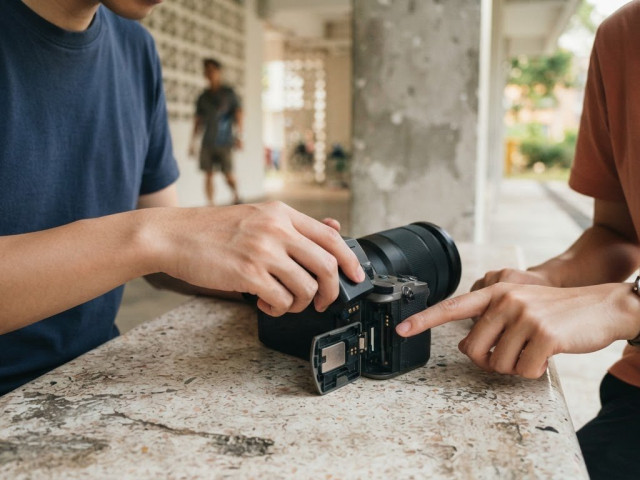
Equipment is another possible expense. If you already own a camera and suitable lenses, you may not need to budget for new gear. If you’re starting without a camera, Pictorial offers complimentary camera loans, so you can take part in practical lessons without buying one first.
Are camera rental or equipment fees included in photography class prices? It depends on the course. Pictorial provides a complimentary camera loan if you don’t have your own, so you can practise during class without bringing a camera.
For a clearer estimate, separate the main costs into practical categories:
- Tuition: the teaching, lesson time, and course materials described in the class information.
- Equipment: any camera or lens access needed to practise the techniques taught.
- Travel: transport to a studio or outdoor location, especially when lessons involve field practice.
- Continued learning: a subscription or other learning resource used beyond scheduled lessons.
Then match each cost to the skill you want to develop. A beginner practising exposure may value camera access more than an editing resource. A learner refining skills with existing equipment may prefer lessons that include feedback on photographs. This makes your estimate more useful than automatically adding every possible extra.
For photography classes, the exact fee depends on the course format, duration, content, and practical instruction included. The figure for your case is provided after a quote request, so consider those factors together rather than treating an optional subscription or equipment purchase as part of every class.
Before enrolling, map expenses across the full learning period. A one-off workshop may involve different transport or equipment needs than a course with several sessions. If an on-demand subscription is relevant, include its annual cost separately from tuition. This breakdown helps you distinguish essentials for practice from optional expenses.
5. What is the average price of a beginner photography course in Singapore?
There isn’t one average price that applies to every beginner photography course in Singapore. The total depends on what the course teaches, how much guided practice it includes, and how its lessons are arranged. A short introduction to camera controls has a different scope from a structured course that builds several skills over time.
Start by comparing course content. A beginner may need help understanding exposure, aperture, shutter speed, and ISO before practising composition. Learning those basics through camera exercises offers a different experience from a course focused mainly on demonstrations or theory. Compare the teaching scope and format with the fee.
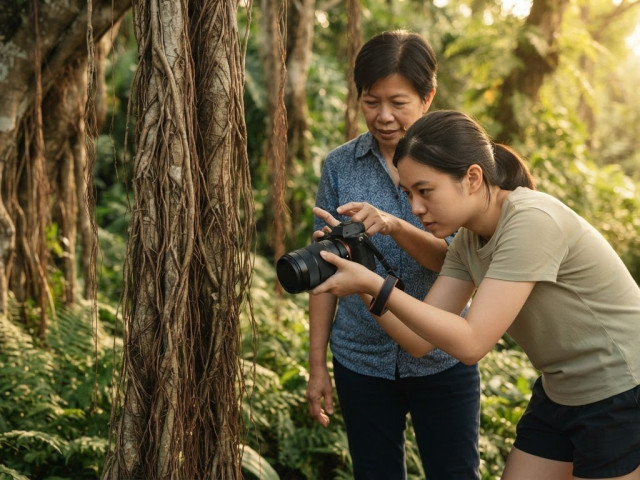
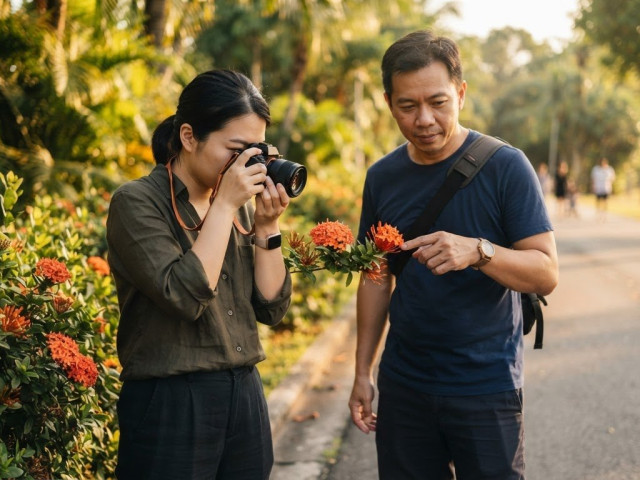
Practice also affects the value of a class. Outdoor instruction gives learners the chance to apply camera settings to changing light and real subjects. You can take a photograph, adjust the exposure, and see how the result changes. That hands-on process differs from a lesson spent explaining settings indoors.
Equipment access can shape what a beginner needs to budget separately. If you already own a camera, you can focus on learning to use it. If not, Pictorial offers a complimentary camera loan, making practical learning possible without buying equipment first.
Class size and feedback are useful comparison points. Pictorial limits group classes to three participants, allowing instructors to provide direct guidance during practice. If you need help correcting a camera setting, that attention may matter more than a class covering many topics quickly. Compare the teaching format alongside the course content.
To judge whether a course suits your budget, compare these details:
- Skills covered: whether the course teaches camera basics, exposure, and composition.
- Practice time: how much of the class involves taking photographs and applying techniques.
- Instruction format: whether learning takes place in a group or through individual guidance.
- Equipment access: whether you need to bring a camera or can use one during class.
- Course scope: whether the lessons introduce core controls or build towards broader skills.
These points help you understand what a beginner course includes without treating every class as equivalent. Match the content to what you want to learn first, such as controlling exposure or framing a clear image. That gives you a practical basis for weighing the fee against the instruction and practice provided.
There isn’t one average price for a beginner photography course in Singapore; the fee varies with the course’s content, format, practice time, equipment access, and level of guidance.
Pictorial
Pictorial offers courses for different experience levels and learning goals. If you’re weighing beginner training against a broader course, consider whether you want to start with camera basics, build on existing experience, or take photographs with a mobile device. The Photography Starter Session, Intermediate Photography Course, Mobile Photography Essentials, and Complete Photography Course address different learning needs. Compare their focus to choose a suitable next step.
Pictorial’s courses include practical guidance, so you can work with camera settings and apply photography principles while shooting. The right starting point depends on your experience and what you hope to learn. You can borrow a complimentary camera if you don’t have your own.
Contact Pictorial to discuss your photography learning options.
Take your next step with confidence
Knowing how much photography classes are can help you plan, but your first learning goal can guide your choice just as clearly. Decide whether you want to understand camera basics, improve your technique, or make stronger images with your phone. A specific goal gives your practice direction and makes it easier to see what you’re learning.
Pictorial offers the Photography Starter Session, Intermediate Photography Course, and Mobile Photography Essentials for different learning needs. Think about the photographs you want to take and the skill you’d like to work on first. You don’t need to master every camera setting at once. Choose a course that matches your goal, practise one skill at a time, and build from there.
Each time you pause to notice light, adjust a setting, or try a new composition, you’re developing your eye. Keep making photographs, stay curious, and let steady practice shape your progress.
Frequently Asked Questions
How Much Are Photography Classes on Average?
There isn’t one average that applies to every photography class in Singapore. A short introductory lesson and a structured course teach different amounts and offer different levels of practice. To compare options, look at the course content, format, teaching time, and whether you’ll receive guidance while taking photographs. These details help you judge what suits your learning goals, rather than relying on an average that may describe a different kind of class.
Can I enroll in photography courses without prior experience?
Yes. Beginner photography courses are designed for learners who are still getting familiar with their camera. You can start by learning what the main controls do, then practise changing settings and observing how they affect a photograph. You don’t need technical knowledge or a polished portfolio to begin. If you already take pictures, your experience can help you choose a class that builds on the skills you’ve developed.
How Much Does it Cost to Learn Photography?
The total depends on how you choose to learn and what equipment you already have. A course is one part of the decision; a camera, suitable lenses, or ongoing learning resources may add separate expenses. You can keep starting costs focused by choosing a class suited to your current skills and using equipment you already own. Pictorial also offers a complimentary camera loan if you don’t have one, so you can practise before deciding whether additional gear is useful.
Disclaimer
© Pictorial | All Rights Reserved.